English
  عربى
عربى  中文简体
中文简体 


Content
- The Main Types of Hatch Covers
- How Does a Hatch Cover Actually Work?
- Materials and Construction Standards
- International Regulations and Testing Standards
- Common Hatch Cover Failures and Real-World Consequences
- Maintenance Best Practices for Hatch Covers
- Hatch Covers vs Other Ship Opening Closures
- Frequently Asked Questions
- What happens if a hatch cover leaks during a voyage?
- How often should hatch cover gaskets be replaced?
- Can hatch covers be repaired at sea?
- What is the difference between weathertight and watertight for hatch covers?
- How much does a complete hatch cover system weigh?
- Are there alternatives to traditional steel hatch covers?
- The Future of Hatch Cover Technology
The Simple Definition
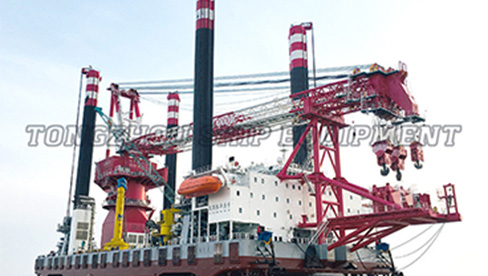
A hatch cover in ship is a heavy, watertight steel closure system installed on the weather deck of a vessel, directly above the cargo holds. Its primary function is to seal the large rectangular openings through which cargo is loaded and unloaded, preventing seawater, rain, and moisture from entering the hold during a voyage. Without a properly secured hatch cover in ship operations, bulk carriers, container ships, and general cargo vessels would face catastrophic flooding risks. These structures are not simple lids; they are precision-engineered mechanisms designed to withstand dynamic sea loads, green water impacts on deck, and the constant flexing of a ship's hull in heavy seas.
Why Hatch Covers Matter More Than You Think
Hatch covers are among the most safety-critical components on any seagoing vessel. According to data published by the UK P&I Club, water ingress through poorly maintained or incorrectly secured hatch covers accounts for a significant percentage of cargo damage claims, with some estimates placing the figure at roughly 30% to 40% of all wet-damage cargo incidents on bulk carriers. The financial cost of a single major hatch cover failure can easily exceed $2 million when factoring in cargo losses, salvage operations, and reputational damage. Beyond economics, a hatch cover in ship failure can lead to loss of buoyancy stability and, in the worst cases, the total loss of the vessel. The sinking of the bulk carrier MV Derbyshire in 1980, which claimed 44 lives, drew intense scrutiny to hatch cover integrity and directly influenced subsequent amendments to the International Convention on Load Lines.
Source: UK P&I Club Loss Prevention Reports; International Maritime Organization (IMO) casualty investigation findings.
The Main Types of Hatch Covers
Modern shipbuilding has produced several distinct categories of hatch covers, each suited to specific vessel types, cargo operations, and deck space constraints. The choice of a hatch cover in ship design directly affects cargo handling speed, structural weight, and long-term maintenance costs.
1. Lifting Type Hatch Covers (Pontoon Hatch Covers)
Lifting type hatch covers consist of large, individual steel panels or pontoons that are lifted on and off the hatch coaming by shore-based cranes or shipboard gantry cranes. Each panel can weigh between 15 and 40 metric tons depending on the hatch opening dimensions and the design load. These covers are commonly found on container ships and some general cargo vessels where the cargo operation already involves heavy-lift cranes. The principal advantage is simplicity: fewer moving parts mean lower manufacturing cost and reduced mechanical failure points. However, the reliance on external lifting equipment limits operational flexibility at ports without sufficient crane capacity.
2. Folding Type Hatch Covers
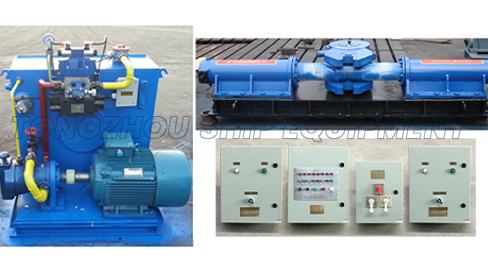
Folding type hatch covers are the most widely used design on modern bulk carriers and multipurpose vessels. They consist of two or more panels connected by hinges, driven by hydraulic cylinders that fold the panels into a compact vertical stack at one or both ends of the hatch opening. A typical folding hatch cover in ship system can complete a full opening or closing cycle in approximately 2 to 5 minutes using electro-hydraulic power packs. This self-contained operation eliminates the need for shore cranes, making folding covers ideal for ports with limited infrastructure. The hydraulic systems typically operate at pressures between 180 and 250 bar, and the panels are fitted with interlocking rubber gaskets that compress to form a weathertight seal when closed.
3. Side-Rolling Type Hatch Covers
Side-rolling hatch covers move horizontally on roller assemblies along tracks mounted on the hatch coaming or the deck. They are commonly specified for large open-hatch container vessels and some Ro-Ro ships where longitudinal deck space is at a premium. The panels roll sideways, often stacking parallel to each other, which clears the entire hatch opening without any vertical protrusion. Rolling resistance is minimized by hardened steel roller bearings, and the driving mechanism may be either rack-and-pinion or chain-driven. A single side-rolling panel on a large container ship can span 12 to 16 meters in width and weigh over 30 metric tons.
4. Stacking Type Hatch Covers
Stacking type covers are essentially a variation where individual panels are lifted and stacked on top of one another at the hatch end using dedicated mechanical lifting arms or a gantry system. This design is less common in new builds but can still be found on older general cargo ships and some river-sea vessels. The stacked panels require careful lashing during sea passage to prevent shifting.
Lifting Type (Pontoon)
Lifted by crane; no onboard hydraulics needed. Simple steel panels with perimeter gaskets. Best for container ships with regular crane access. Panel weight: 15 to 40 tons each.
Folding Type
Hydraulic-powered hinged panels; self-contained operation. Opens or closes in 2 to 5 minutes. Most common on bulk carriers. Operating pressure: 180 to 250 bar.
Side-Rolling Type
Rolls horizontally on track rollers; clears entire opening. Ideal for open-hatch container ships. Panel span up to 16 meters. Rack-and-pinion or chain-driven.
Stacking Type
Panels lifted and stacked at hatch end. Found on older vessels. Requires secure lashing when stacked. Lower manufacturing cost but slower operation.
| Hatch Cover Type | Operation Method | Typical Vessel Type | Opening Time (approx.) | Key Advantage | Key Limitation |
|---|---|---|---|---|---|
| Lifting (Pontoon) | Shore or ship crane | Container ships, general cargo | 5 to 15 min (crane-dependent) | Simple design, low onboard maintenance | Requires crane availability |
| Folding | Hydraulic cylinders | Bulk carriers, multi-purpose | 2 to 5 min | Self-contained, fast cycle | Complex hydraulics, higher maintenance |
| Side-Rolling | Rack-and-pinion or chain drive | Open-hatch container ships | 3 to 6 min | Clears entire opening horizontally | Requires deck track space |
| Stacking | Mechanical lift arms | Older general cargo, river-sea | 8 to 20 min | Low manufacturing cost | Slow operation, needs lashing |
| Pontoon (open hatch) | Gantry crane | Large container vessels | 7 to 14 min | No hydraulic maintenance | Crane scheduling critical |
Comparison of major hatch cover types used on commercial vessels, showing operational characteristics and typical applications across different ship categories.
How Does a Hatch Cover Actually Work?
The Watertight Sealing Principle
A hatch cover in ship achieves its watertight integrity through controlled compression of elastomeric rubber gaskets between the steel cover panel and the raised hatch coaming. When the cover is lowered into its closed position, a series of mechanical cleats, wedges, or hydraulic locking devices apply downward pressure, compressing the rubber packing by approximately 8 to 12 millimeters. This compression creates a continuous seal around the entire perimeter of the hatch opening. The rubber compounds used are specifically formulated to resist saltwater degradation, UV radiation, and temperature extremes ranging from minus 40 degrees Celsius to plus 70 degrees Celsius. The most commonly specified gasket profiles include double-lip, bulb-type, and channel-type cross-sections, each offering different compression-recovery characteristics.
Securing and Locking Systems
The securing system is equally critical. Quick-acting cleats spaced at intervals of 600 to 900 millimeters along the hatch perimeter provide uniform clamping force. On folding hatch covers, hydraulic cylinders not only open and close the panels but also contribute to the final sealing compression. Cross-joint wedges between adjacent panels prevent relative movement and maintain gasket compression at panel intersections. The International Association of Classification Societies (IACS) requires that all securing devices be clearly marked and that their correct closed positions be visually identifiable during routine inspections. A single loose cleat can create a gap as small as 2 to 3 millimeters, which is sufficient to allow high-pressure water spray to penetrate the hold in heavy weather conditions.
Source: IACS UR S21 (Unified Requirement for Hatch Covers); DNV Classification Rules for Ships, Part 3, Chapter 6.
Materials and Construction Standards
Steel Grades and Corrosion Protection
Hatch cover panels are fabricated from high-tensile shipbuilding steel, typically grades AH32, AH36, or DH36 under the classification society rules. The top plating thickness generally ranges from 8 to 16 millimeters, while the hatch coaming plating can be 12 to 20 millimeters thick depending on the vessel size and design wave loads. All steel surfaces receive a multi-layer protective coating system: a shop primer, followed by epoxy anti-corrosion coats, and finished with a UV-resistant polyurethane topcoat. The coating dry film thickness typically measures between 250 and 350 microns. In high-wear areas such as compression bars and drainage channels, stainless steel grade 316L inserts are often welded in place to resist pitting corrosion and mechanical abrasion from cargo handling equipment.
Rubber Packing and Gasket Materials
Hatch cover gaskets are predominantly manufactured from ethylene propylene diene monomer (EPDM) rubber or neoprene (polychloroprene). EPDM offers excellent resistance to ozone, UV radiation, and seawater, with a typical service life of 4 to 7 years under normal operating conditions. Neoprene provides better resistance to oil and grease contamination but is less elastic at very low temperatures. The gasket hardness typically falls within the Shore A 60 to 70 range, balancing sufficient softness for effective compression with enough rigidity to resist permanent deformation. A single set of replacement gaskets for a Panamax bulk carrier can cost between $15,000 and $35,000 depending on the total perimeter length and the gasket profile complexity.
Source: MacGregor (Cargotec) hatch cover technical manuals; Trelleborg marine sealing systems product data sheets.
International Regulations and Testing Standards
The regulatory framework governing a hatch cover in ship is primarily established by the International Maritime Organization (IMO) through the International Convention on Load Lines (1966) and its subsequent amendments, along with the International Convention for the Safety of Life at Sea (SOLAS). These conventions mandate that all weather deck hatch covers must be designed, constructed, and maintained to be weathertight under all sea conditions reasonably expected during the vessel's service life.
Key IMO Testing Requirement: Under IMO Resolution MSC.143(77), all newly installed hatch covers on bulk carriers must undergo a hose test or an equivalent ultrasonic tightness test. The hose test uses a jet of water from a 12-millimeter diameter nozzle at a pressure of at least 2 bar, directed at all sealing joints from a distance of no more than 1.5 meters. For ultrasonic testing, the acceptable sound pressure level attenuation must demonstrate a reading above the open-hatch reference value as verified by a class surveyor. Additionally, some classification societies require a compression pressure test at 0.25 bar differential pressure held for a minimum of 15 minutes without measurable leakage.
| Test Method | Standard / Reference | Key Parameters | Acceptance Criteria | Frequency |
|---|---|---|---|---|
| Hose Water Test | IMO MSC.143(77) | 12 mm nozzle, 2 bar pressure, 1.5 m distance | No visible water ingress inside hold | After installation and after major repairs |
| Ultrasonic Tightness Test | IACS UR Z17 | Ultrasonic transmitter inside hold, receiver outside | Attenuation above open-hatch baseline | Annual surveys for bulk carriers |
| Chalk Test | Classification society guidelines | Chalk powder on compression bar, close and reopen cover | Continuous chalk transfer along full gasket length | Routine maintenance checks |
| Pressure Decay Test | DNV / Lloyd's Register procedures | 0.25 bar differential, 15-minute hold | Pressure drop less than 0.02 bar in 15 minutes | Special surveys (every 5 years) |
Standard watertight integrity testing methods for hatch covers as required by IMO conventions, IACS unified requirements, and major classification societies.
Common Hatch Cover Failures and Real-World Consequences
Despite stringent design standards, a hatch cover in ship system can fail due to multiple factors. Analysis of insurance claims data from the Nordic Association of Marine Insurers and the UK P&I Club reveals several recurring failure patterns. The most frequently reported issues include deteriorated rubber gaskets (accounting for roughly 45% of hatch-related claims), corroded or distorted compression bars (approximately 25%), malfunctioning hydraulic systems (roughly 18%), and improper securing by the crew (approximately 12%).
In 2019, a bulk carrier transiting the North Atlantic during winter conditions experienced severe water ingress through poorly compressed hatch cover gaskets. The investigation report noted that several cleats had not been fully tightened after cargo loading, and the rubber packing had hardened due to age beyond its service life. Over 2,000 metric tons of grain cargo was damaged by seawater, resulting in a claim exceeding $1.8 million. The vessel was detained for repairs at the next port, incurring additional off-hire costs of approximately $35,000 per day for 11 days. This single incident illustrates how a relatively small maintenance oversight can cascade into a multi-million-dollar loss.
Source: Marine accident investigation reports; Gard P&I Club loss prevention circulars.
Maintenance Best Practices for Hatch Covers
Effective maintenance of a hatch cover in ship requires a systematic, documented approach that combines routine visual inspections with periodic advanced testing. The following practices represent the consensus recommendations from classification societies and P&I Club loss prevention departments worldwide.
- Daily Visual Checks: Before every sea passage, the crew should visually inspect all hatch cover sealing surfaces, cleats, and gaskets for obvious damage, debris, or misalignment. Pay special attention to cross-joint wedges and drainage channels.
- Weekly Gasket Inspection: Rubber packing should be checked for cracking, permanent compression set, and oil contamination. Any gasket showing cracks deeper than 2 millimeters or permanent deformation exceeding 30% of its original height should be scheduled for replacement.
- Monthly Cleat Torque Verification: All quick-acting cleats should be checked for correct tightening torque using a calibrated torque wrench. Loose cleats can reduce gasket compression by 20% to 40%, dramatically increasing leakage risk.
- Quarterly Hydraulic System Service: Hydraulic oil should be sampled and analyzed for contamination, water content, and viscosity degradation. Hoses and cylinders should be inspected for external leaks, and all hydraulic pressures should be verified against manufacturer specifications.
- Annual Ultrasonic Testing: A full ultrasonic tightness test should be conducted by a certified service provider during the vessel's annual class survey. This provides an objective, quantifiable measurement of sealing integrity that visual inspection alone cannot guarantee.
- Coating Maintenance: Any areas of coating breakdown, rust staining, or pitting on the steel panels or compression bars should be immediately spot-blasted and recoated to prevent rapid corrosion progression in the marine environment.
- Record Keeping: All inspections, tests, repairs, and parts replacements should be logged in a dedicated hatch cover maintenance register, which must be available for review by classification society surveyors and port state control inspectors.
Hatch Covers vs Other Ship Opening Closures
While a hatch cover in ship serves the primary cargo hold opening, vessels also employ several other types of weathertight and watertight closures. Understanding the distinctions helps clarify the unique engineering demands placed on hatch covers.
| Closure Type | Location | Design Standard | Typical Size | Key Difference from Hatch Covers |
|---|---|---|---|---|
| Hatch Cover | Weather deck over cargo hold | Weathertight (Load Line Convention) | 10 m x 15 m up to 20 m x 30 m | Largest opening; subject to green water loads |
| Watertight Door | Internal bulkheads below waterline | Watertight (SOLAS) | 0.7 m x 1.8 m typical | Must resist full hydrostatic head pressure |
| Weathertight Door | Superstructure access, deckhouses | Weathertight (Load Line Convention) | 0.7 m x 1.8 m typical | Smaller; protected from direct wave impact |
| Ventilator Closure | Deck ventilators, air pipes | Weathertight (Load Line Convention) | 150 mm to 400 mm diameter | Much smaller; automatic float-valve closing |
| Manhole Cover | Ballast tanks, fuel tanks | Oil-tight or watertight | 600 mm x 400 mm oval typical | Bolted closure; infrequently opened |
Comparative overview of different shipboard opening closures, highlighting how hatch covers differ in scale, regulatory requirements, and exposure to environmental loads.
Frequently Asked Questions
What happens if a hatch cover leaks during a voyage?
Even a small leak can allow seawater spray to enter the cargo hold in heavy weather. Over several days at sea, this can accumulate to hundreds of liters of water, damaging sensitive cargoes like grain, steel products, or paper reels. The vessel may face cargo claims, off-hire disputes, and port state control detention. If the leak is severe enough to affect the vessel's stability by creating free-surface water in the hold, it can become a serious safety hazard requiring immediate diversion to a port of refuge.
How often should hatch cover gaskets be replaced?
Under normal operating conditions, EPDM rubber hatch cover gaskets have a service life of approximately 4 to 7 years. However, vessels operating in tropical climates with intense UV exposure or vessels frequently carrying oil-contaminated cargoes may need gasket replacement every 3 to 5 years. The best indicator is not elapsed time but the physical condition of the rubber: permanent compression set beyond 30%, surface cracking deeper than 2 millimeters, or loss of Shore A hardness by more than 10 points all signal that replacement is due.
Can hatch covers be repaired at sea?
Minor repairs such as adjusting cleat tension, cleaning drainage channels, or applying temporary sealing compound to small gasket defects can be performed by the crew while underway. Major structural repairs involving welding, steel plate replacement, or hydraulic system overhauls require a port call with appropriate workshop facilities and must be surveyed by a classification society surveyor before the vessel can sail with the repaired cover in service. Temporary sealing measures should never be relied upon as a substitute for proper permanent repairs.
What is the difference between weathertight and watertight for hatch covers?
A weathertight closure, which is the standard for weather deck hatch covers under the Load Line Convention, means that water will not penetrate into the ship under any sea conditions that can reasonably be expected. A watertight closure, required for internal bulkheads below the waterline under SOLAS, must resist a defined hydrostatic pressure head. Weather deck hatch covers are designed to be weathertight, not fully watertight, because they are not expected to be continuously submerged. However, they must still withstand green water impacts where large volumes of seawater wash across the deck.
How much does a complete hatch cover system weigh?
The total weight of a complete hatch cover in ship system depends on the vessel size and the number of holds. For a typical Panamax bulk carrier with seven cargo holds, the combined weight of all hatch covers, hydraulic systems, and coaming structures can range from 350 to 550 metric tons. For a large Capesize bulk carrier with nine holds, the total can exceed 700 metric tons. This substantial weight must be carefully accounted for in the vessel's lightship weight and stability calculations.
Are there alternatives to traditional steel hatch covers?
Research into composite materials for hatch covers has produced some experimental designs using fiber-reinforced polymer (FRP) panels, which offer significant weight savings of 40% to 60% compared to equivalent steel panels. However, as of 2026, FRP hatch covers have not achieved widespread commercial adoption in large ocean-going vessels due to higher manufacturing costs, concerns about long-term fatigue performance, and the conservative nature of maritime regulatory frameworks. Some smaller inland waterway vessels and coastal barges have successfully used aluminum hatch covers, which provide corrosion resistance and weight reduction for vessels operating in less demanding sea conditions.
The Future of Hatch Cover Technology
Innovation in hatch cover in ship design is being driven by three main trends: digitalization, weight reduction, and autonomous operation. Several leading classification societies, including DNV and Lloyd's Register, have approved condition-based monitoring systems that embed fiber-optic strain sensors within hatch cover panels. These sensors continuously measure structural stress, gasket compression, and panel deflection, transmitting data to the bridge and to shore-based fleet management centers via satellite link. Early adopters of these smart hatch cover systems report a reduction in unplanned maintenance events by up to 35% and a measurable decrease in cargo damage claims.
On the materials front, research funded by the European Union's Horizon program has explored high-strength low-alloy (HSLA) steels with yield strengths exceeding 460 MPa for hatch cover applications, potentially reducing panel weight by 15% to 20% without sacrificing structural integrity. Meanwhile, fully electric linear actuators are beginning to replace traditional hydraulic cylinders in prototype folding hatch cover installations, eliminating hydraulic oil leaks and simplifying the power system architecture. These developments signal a steady evolution toward safer, lighter, and more intelligent cargo closure systems for the global merchant fleet.