English
  عربى
عربى  中文简体
中文简体 
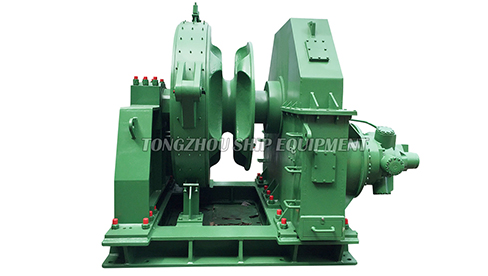
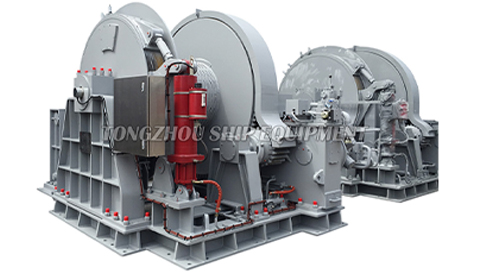
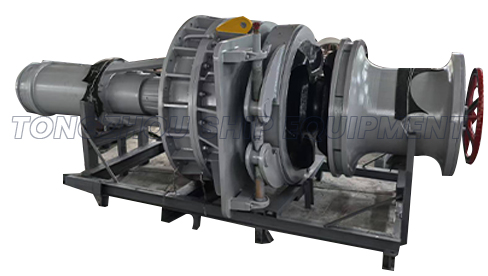
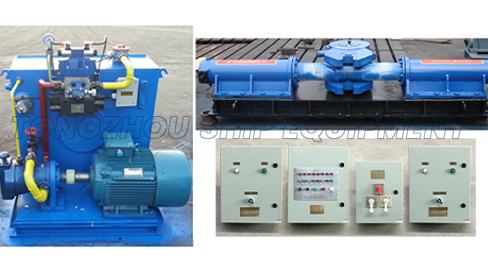
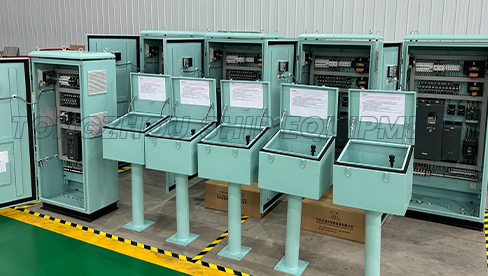
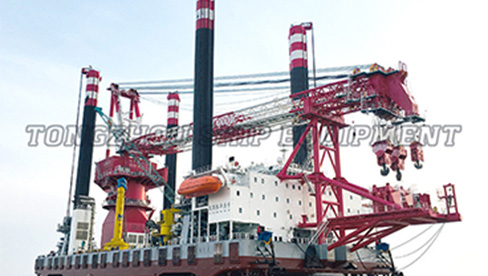


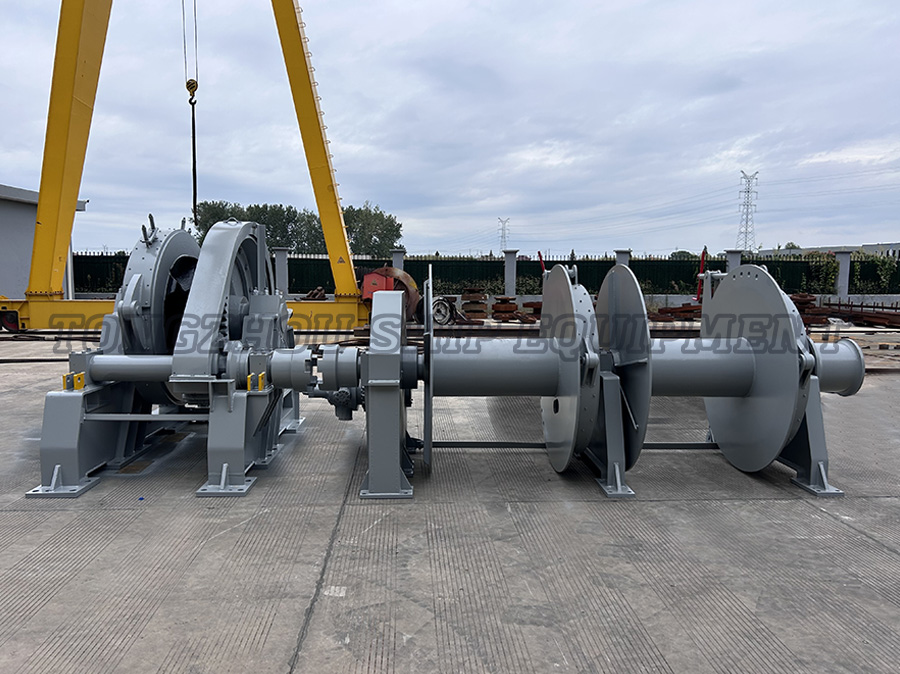
An anchor windlass is a mechanical or electro-mechanical device mounted on a vessel's bow that automates the raising and lowering of an anchor and its chain — and for any boat anchoring regularly in depths beyond 15 feet, it is not a luxury but a necessity. Without one, retrieving a heavy anchor and chain by hand can take 15–30 minutes of strenuous effort, while a powered anchor windlass completes the same task in under 3 minutes with the press of a button.
This guide covers everything you need to know about anchor windlasses: how they work, which types suit different vessels, how to choose the right one, installation considerations, maintenance tips, and answers to the most frequently asked questions.
Content
- How Does an Anchor Windlass Work?
- Types of Anchor Windlass: Which One Is Right for Your Vessel?
- Anchor Windlass Comparison: Horizontal vs. Vertical vs. Electric vs. Hydraulic
- How to Choose the Right Anchor Windlass: Key Sizing Criteria
- Anchor Windlass Installation: What You Need to Know
- Anchor Windlass Maintenance: Extending the Life of Your Equipment
- Chain Rode vs. Rope Rode: What Your Windlass Needs to Handle
- Using Your Anchor Windlass Safely: Scope, Loading, and Best Practices
- Common Anchor Windlass Problems and How to Fix Them
- Frequently Asked Questions About Anchor Windlasses
- Conclusion: Is an Anchor Windlass Worth the Investment?
How Does an Anchor Windlass Work?
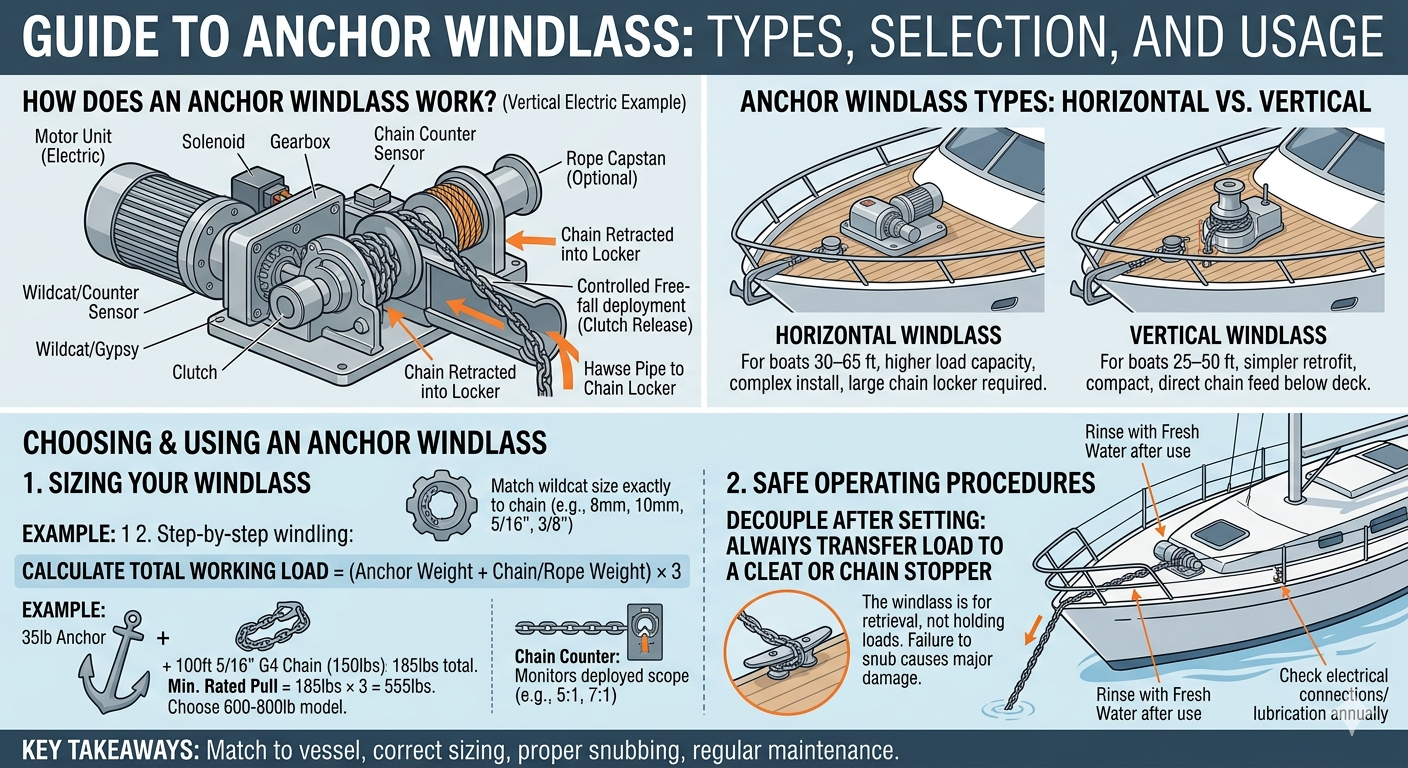
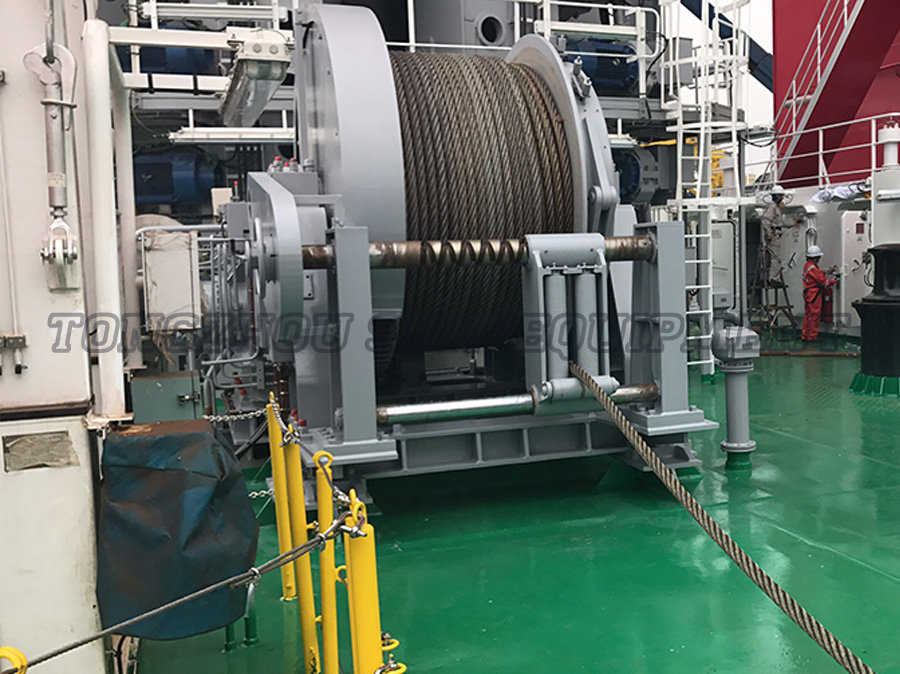
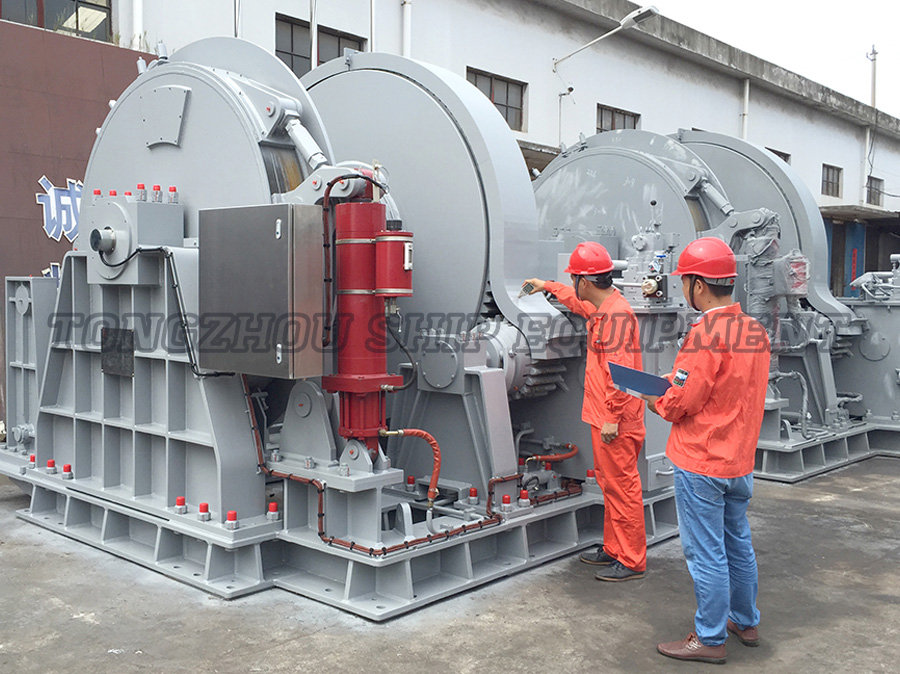
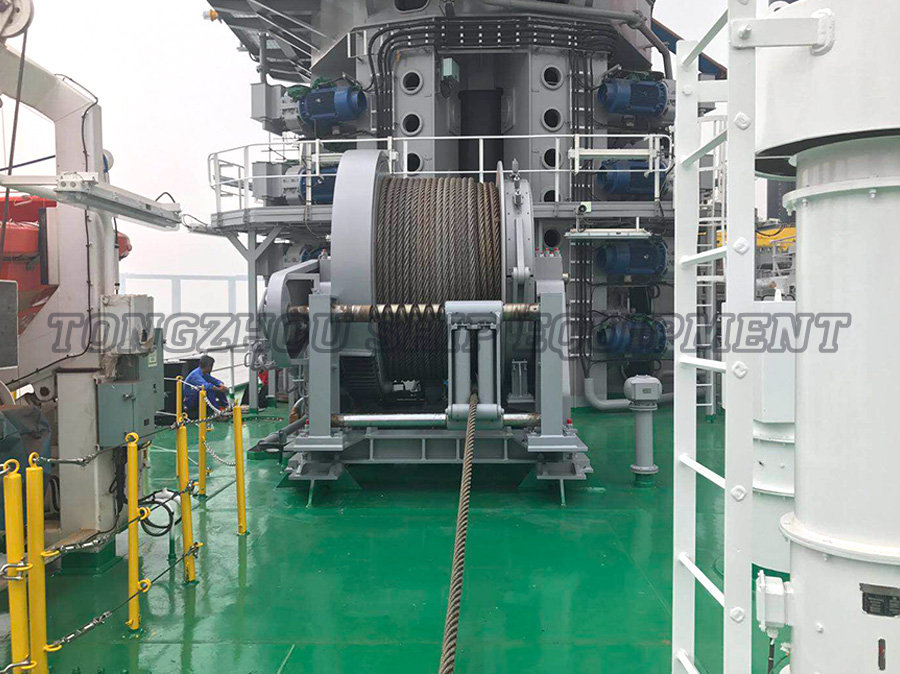
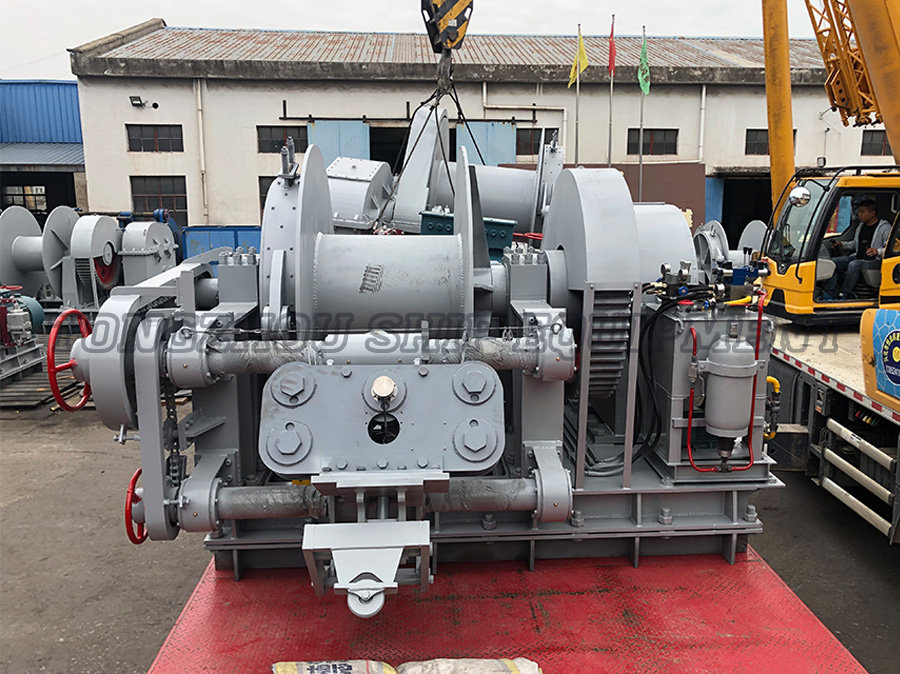
An anchor windlass works by using a drum (called a wildcat or gypsy) that grips anchor chain links or rope, driven by an electric motor, hydraulic motor, or manual hand operation. The core components are straightforward but must be correctly matched to your vessel's anchor system:
- Motor unit — Electric (12V or 24V DC) or hydraulic power source driving the drum.
- Wildcat/gypsy — A toothed drum sized to grip your specific chain grade and size (e.g., G4, G7, 8mm, 10mm).
- Capstan (optional) — A vertical drum for handling dock lines or rope rode.
- Clutch mechanism — Allows free-fall deployment of the anchor without running the motor.
- Chain counter — Tracks how much chain has been deployed for accurate scope calculation.
When the operator activates the windlass (via deck button, helm remote, or foot switch), the motor spins the wildcat, which engages the chain links and either hauls them aboard into the chain locker or pays them out over the bow.
Types of Anchor Windlass: Which One Is Right for Your Vessel?
The right anchor windlass type depends primarily on your boat's size, deck layout, anchor system weight, and power availability. There are four main categories to consider.
1. Horizontal Anchor Windlass
A horizontal anchor windlass mounts flush with the deck and runs its drum on a horizontal axis. The motor is typically hidden below deck, which reduces deck clutter and lowers the windlass's profile — ideal for sailboats with low freeboard or any vessel where deck aesthetics matter. The chain runs horizontally across the drum and drops into the chain locker below through a hawse pipe. Horizontal models generally have a higher load capacity and are well-suited for vessels from 30 to 60+ feet.
2. Vertical Anchor Windlass
A vertical anchor windlass has a vertically oriented drum (capstan) that protrudes above the deck. The entire motor assembly mounts below the deck, leaving only a compact capstan head visible. Because the chain feeds straight down into the chain locker, a vertical windlass is particularly effective on powerboats where the chain locker sits directly beneath the bow. Easier to install on retrofits and popular on vessels from 25 to 50 feet.
3. Electric Anchor Windlass
The vast majority of recreational marine anchor windlasses sold today are electric, running on 12V or 24V DC from the vessel's battery bank. Electric windlasses are easy to install, responsive, and widely supported. For vessels under 45 feet, a 12V system is typical. Larger vessels benefit from 24V systems, which deliver equivalent power with half the current draw — reducing wire size requirements and heat buildup. Typical electric models draw 60–250 amps at peak load, so a robust battery bank and properly sized cabling (often 2/0 AWG or larger) are essential.
4. Hydraulic Anchor Windlass
A hydraulic anchor windlass draws power from the vessel's hydraulic system (commonly shared with steering, bow thrusters, or other equipment). Hydraulic models offer exceptional power and durability, virtually no heat buildup during extended use, and are standard on vessels above 60 feet and commercial workboats. The trade-off is greater installation complexity and the need for an existing or dedicated hydraulic circuit.
Anchor Windlass Comparison: Horizontal vs. Vertical vs. Electric vs. Hydraulic
| Feature | Horizontal Electric | Vertical Electric | Hydraulic | Manual |
| Typical Vessel Size | 30–65 ft | 25–50 ft | 45 ft+ | Under 30 ft |
| Power Source | 12V / 24V DC | 12V / 24V DC | Hydraulic system | Human effort |
| Deck Profile | Low / flush | Moderate | Low–moderate | Low |
| Installation Complexity | Moderate | Easier | Complex | Simple |
| Rated Pull Capacity | 500–2,000 lbs | 500–1,500 lbs | 1,000–5,000+ lbs | 100–400 lbs |
| Sustained Duty Use | Limited (heat) | Limited (heat) | Excellent | Limited (fatigue) |
| Cost Range (USD) | $400–$2,500 | $350–$2,000 | $1,500–$8,000+ | $80–$400 |
Table 1: Side-by-side comparison of anchor windlass types by vessel size, power source, capacity, and cost.
How to Choose the Right Anchor Windlass: Key Sizing Criteria
Choosing the correct anchor windlass starts with calculating your system's total working load — the combined weight of your anchor, chain, and shackles that the windlass must retrieve. As a rule of thumb, select a windlass with a rated working load at least 3× the total ground tackle weight.
Step-by-Step Sizing Guide
- Weigh your anchor — Common sizes: 15 lbs (25 ft boat), 35 lbs (35 ft boat), 66 lbs (45 ft boat).
- Calculate chain weight — 5/16" G4 chain weighs approximately 1.5 lbs/ft; 3/8" G4 weighs ~2.2 lbs/ft. For 100 ft of 3/8" chain, that's 220 lbs.
- Add shackle and swivel weight — typically 2–5 lbs.
- Multiply by 3 — This gives your minimum windlass rated pull.
- Verify wildcat compatibility — Match the windlass wildcat size (e.g., 8mm, 10mm, 5/16", 3/8") exactly to your chain grade and diameter.
- Check voltage and cable run — Long cable runs from battery to windlass increase resistance; size cable accordingly (voltage drop should not exceed 3%).
Example: A 40-foot sailboat with a 44 lb anchor + 150 ft of 3/8" G4 chain (330 lbs) + 3 lbs of hardware = 377 lbs total. Minimum windlass rating: 377 × 3 = 1,131 lbs. A model rated at 1,200–1,500 lbs would be appropriate.
Anchor Windlass Installation: What You Need to Know
Proper anchor windlass installation is critical for both performance and safety — a poorly mounted windlass can fail under load or damage the deck structure. Here are the most important considerations:
Structural Mounting
The windlass must be bolted to a reinforced area of the bow deck, often requiring a backing plate of 1/4" aluminum or stainless steel on the underside. Never mount a windlass to unreinforced fiberglass alone. Stainless steel through-bolts (minimum 3/8") with large washers distribute load across the backing plate.
Electrical Wiring
Electric anchor windlasses draw high current — often 100–250 amps at peak. Use correctly rated marine-grade tinned copper cable with a dedicated circuit breaker or circuit breaker/fuse rated just above the windlass's maximum draw. A typical 1,000W, 12V windlass requires roughly 85 amps continuous and up to 150 amps at stall; a 2/0 AWG (or larger) cable on a 20-foot run is commonly specified. Always install a manual circuit breaker at the battery for emergency shutoff.
Chain Locker Design
The chain must feed freely from the windlass wildcat into the chain locker without piling up or jamming. The locker should be large enough to accommodate your full chain rode with room for natural stacking. A drain hole prevents water accumulation, which adds weight and corrodes chain. Some installations include a chain pipe with a removable plug for manual chain access.
Anchor Windlass Maintenance: Extending the Life of Your Equipment
Regular maintenance keeps your anchor windlass operating reliably for 10–20+ years. Neglect is the primary cause of windlass failure in the marine environment.
Monthly Checks
- Rinse wildcat, drum, and exposed surfaces with fresh water after saltwater use.
- Inspect chain for elongation, corrosion, and cracked links — replace any link showing more than 10% elongation.
- Check clutch engagement and ensure the brake/drum holds under manual tension.
- Verify all electrical connections are tight, corrosion-free, and properly sealed.
Annual Service
- Disassemble the gypsy/wildcat housing and re-grease bearings with waterproof marine grease.
- Inspect motor brushes (on brushed models) — replace when worn to less than 1/4 of original length.
- Check all mounting bolts for corrosion and proper torque.
- Test the solenoid and contactors; clean contact surfaces if pitting is present.
- Rinse and re-lubricate all moving stainless components with corrosion inhibitor (e.g., Lanolin-based products).
Chain Rode vs. Rope Rode: What Your Windlass Needs to Handle
Most modern anchor windlasses are designed primarily for chain rode, but many models include a separate drum or rope capstan to handle rope rode or a combination (chain-rope) system. Here's a quick comparison of what each rode type requires from your windlass:
| Rode Type | Windlass Requirement | Holding Power | Weight | Best Use |
| All Chain | Sized wildcat required | Excellent | Heavy | Liveaboards, bluewater |
| Chain + Rope | Wildcat + rope drum | Good | Moderate | Coastal cruising |
| All Rope | Capstan only | Moderate | Light | Day sailing, shallow water |
Table 2: Comparison of anchor rode types and their windlass compatibility requirements.
Using Your Anchor Windlass Safely: Scope, Loading, and Best Practices
An anchor windlass is a retrieval and deployment tool — it is not a load-bearing mooring device. Once the anchor is set, always secure the chain to a dedicated bow cleat or chain stopper before loading the windlass. Relying on the windlass drum to hold the boat at anchor puts enormous stress on the motor and gearbox, and can destroy the unit quickly.
- Use a chain stopper or bow cleat — After deploying the anchor, snub the chain to a cleat. The windlass holds nothing under sail or power load.
- Deploy in controlled bursts — Use the clutch for free-fall deployment in shallow water; use power-out mode in deeper water to prevent chain piling on the anchor.
- Never run the motor continuously for more than 2–3 minutes — Allow cooling between retrieval cycles to prevent overheating (most electric windlasses are rated for intermittent, not continuous duty).
- Maintain a 5:1 scope minimum — In calm conditions, 5:1 (chain length to water depth) is a minimum; 7:1 is recommended in wind above 20 knots.
- Keep hands clear of the wildcat at all times — Running chain can sever fingers instantly. Use only foot switches or remote controls during operation.
Common Anchor Windlass Problems and How to Fix Them
Even well-maintained anchor windlasses encounter occasional issues. Here are the most common problems and their solutions:
| Problem | Likely Cause | Solution |
| Windlass won't run | Blown fuse / tripped breaker | Check and replace fuse; inspect for short circuit |
| Slow or weak retrieval | Low battery voltage / undersized cable | Charge batteries; upgrade cable gauge |
| Chain skips on wildcat | Chain size/grade mismatch | Verify chain spec matches wildcat; replace worn chain |
| Motor overheats / stops | Continuous use exceeding duty cycle | Allow 10-min cool-down; check thermal cutout reset |
| Clutch slips under load | Worn clutch plate / lack of grease | Inspect and replace clutch disc; service per manual |
| Corrosion / stiff operation | Salt buildup / insufficient maintenance | Flush with fresh water; re-grease all bearings |
Table 3: Common anchor windlass problems, their causes, and recommended solutions.
Frequently Asked Questions About Anchor Windlasses
Q: What is the difference between an anchor windlass and a capstan?
A windlass uses a horizontally oriented drum (wildcat) designed specifically to engage anchor chain and is optimized for anchoring duties. A capstan has a vertically oriented drum and is used primarily for dock lines and rope rode. Many modern units combine both, with a wildcat for chain and a rope drum on the same shaft for versatility.
Q: Can I use an anchor windlass to hold my boat at anchor?
No. An anchor windlass is rated for retrieval loads (intermittent), not sustained holding loads. The full force of the boat surging against the anchor in wind or current — which can reach thousands of pounds on a 40-foot vessel — must be taken by a bow cleat, samson post, or chain stopper. Using the windlass as a load-bearing device will damage or destroy the gearbox and motor.
Q: How much does a good electric anchor windlass cost?
Entry-level electric anchor windlasses for boats under 35 feet start around $350–$600. Mid-range models for 35–50 ft vessels typically cost $700–$1,500. High-quality units for 50+ ft bluewater boats run $1,500–$2,500+. Hydraulic systems begin around $2,000 and can exceed $8,000 installed. Factor in wiring, backing plates, and installation labor when budgeting.
Q: What chain size does an anchor windlass require?
There is no universal answer — the wildcat on your anchor windlass is machined to specific chain dimensions. Common sizes include 5/16" and 3/8" BBB or G4 chain in Imperial measure, and 8mm, 10mm, or 12mm in metric. You must match your chain's diameter and grade to the wildcat specification precisely. Using the wrong size causes chain skipping, accelerated wear, and potentially catastrophic failure.
Q: How long does an anchor windlass last?
With proper installation and regular maintenance, a quality electric anchor windlass should last 10–20 years in recreational use. The most common failure points are motor brushes (in brushed-motor models), solenoid contactors, and corrosion of the wildcat and external castings. Annual service and immediate freshwater rinsing after every saltwater use dramatically extend service life.
Q: 12V or 24V anchor windlass — which is better?
For vessels under 40 feet with short cable runs, a 12V anchor windlass is practical and widely available. For larger boats or any installation with cable runs exceeding 20–25 feet, a 24V system is superior — it delivers the same power at half the current, which means significantly smaller (and cheaper) wiring, reduced voltage drop, less heat, and greater reliability. If your vessel already runs a 24V DC system, always choose a 24V windlass.
Conclusion: Is an Anchor Windlass Worth the Investment?
Absolutely — and for any boater anchoring regularly in more than 15 feet of water with a chain rode, an anchor windlass is one of the highest-value upgrades available. The difference between hand-hauling 200 feet of chain and anchor (totaling 250–400 lbs) and pressing a button to retrieve the same in 90 seconds is enormous in terms of physical strain, crew safety, and anchoring efficiency.
The key to getting full value is proper sizing, correct installation, a matched wildcat-to-chain specification, and consistent maintenance. An undersized windlass that is overworked will fail; a correctly sized unit that is rinsed and serviced regularly will serve reliably for decades.
Whether you're upgrading an existing vessel or outfitting a new one, take the time to calculate your total ground tackle weight, select the correct anchor windlass type (horizontal vs. vertical, electric vs. hydraulic), verify wildcat compatibility with your chain, and plan your electrical installation carefully. Done right, your anchor windlass will be one of the most reliable and appreciated pieces of equipment on board.