English
  عربى
عربى  中文简体
中文简体 
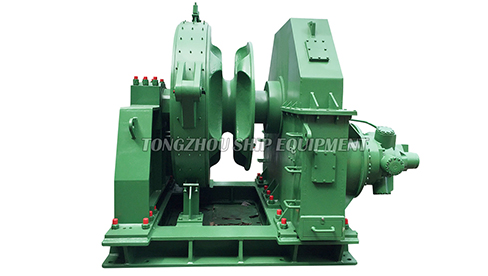
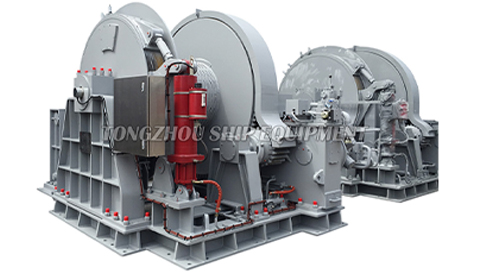
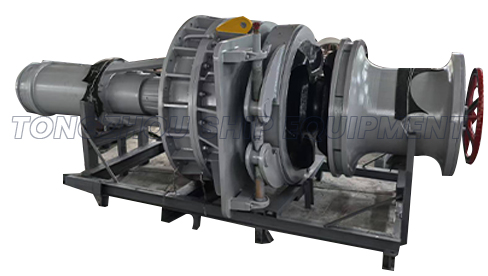
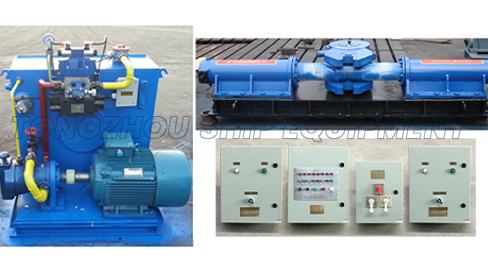
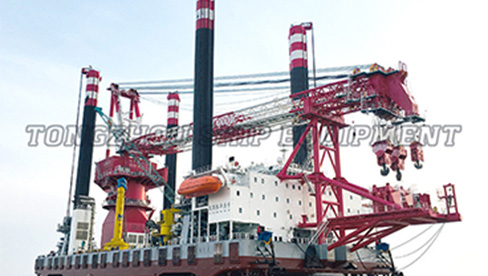


The main types of anchor chain stoppers used on ships are the guillotine (knife-edge) stopper, the roller pawl stopper, the toggle (turnbuckle) stopper, and the hydraulic chain stopper. Each type serves the same fundamental purpose—locking the anchor chain securely in the stowed position to prevent accidental release and to transfer the tremendous static and dynamic loads from the chain to the hull—but they differ in their engagement mechanism, holding capacity, suitability for different vessel sizes, and compatibility with automatic windlass operation. According to the International Association of Classification Societies (IACS) Unified Requirement UR S1, every seagoing vessel must be equipped with a chain stopper capable of withstanding a force equal to 80% of the minimum breaking strength of the anchor chain. Understanding the characteristics of each anchor chain stopper type enables naval architects, shipowners, and crews to select the correct securing device for the vessel's anchoring arrangement and to operate it safely throughout the ship's service life.
Content
- 1. Guillotine (Knife-Edge) Chain Stopper: The Heavy-Duty Industry Standard
- 2. Roller Pawl Chain Stopper: The Automatic Engagement Specialist
- 3. Toggle (Turnbuckle) Chain Stopper: The Simple, Adjustable Solution
- 4. Hydraulic Chain Stopper: The Remote-Controlled, High-Precision Choice
- Selecting the Correct Anchor Chain Stopper for a Vessel
- Frequently Asked Questions About Anchor Chain Stoppers
1. Guillotine (Knife-Edge) Chain Stopper: The Heavy-Duty Industry Standard
The guillotine stopper is the most widely used anchor chain stopper on large merchant vessels—including bulk carriers, tankers, and container ships—because its vertical sliding wedge provides a positive, irreversible mechanical lock on a single chain link and requires no external power to maintain its holding force. The device consists of a robust steel housing bolted or welded to the deck, with a heavy steel bar or wedge that slides vertically down through the gap between two adjacent chain links. When the wedge is fully lowered, its angled face presses the link firmly against a machined seat, and any pull on the chain tightens the wedge even further due to the self-energizing geometry. The holding capacity of a guillotine anchor chain stopper is typically rated to match the full 80% of chain breaking strength required by class rules, and for a Panamax bulker using an 81-millimeter Grade U3 stud-link chain with a breaking strength of approximately 4,800 kilonewtons, the stopper must safely hold a load of 3,840 kilonewtons. The guillotine stopper is operated by manually lifting the wedge bar and locking it in the raised position with a retaining pin, or by a hydraulic cylinder on larger installations. It is simple, virtually maintenance-free aside from greasing the sliding surfaces, and is the preferred choice wherever chain diameters exceed 50 millimeters.
2. Roller Pawl Chain Stopper: The Automatic Engagement Specialist
The roller pawl stopper is uniquely designed to allow the windlass to haul in the anchor chain without any manual intervention, because its spring-loaded or gravity-activated pawl automatically rides over each chain link during hauling and then drops behind a link to prevent the chain from running back out. This feature makes the roller pawl anchor chain stopper particularly efficient during anchoring operations, as the crew does not need to repeatedly open and close the stopper between bursts of windlass operation. Inside the stopper body, a pivoting steel pawl with a roller at its tip rests on top of the chain. As the chain is pulled inward, the links lift the pawl and it rolls over them. The moment hauling stops and the chain tries to reverse direction, the pawl drops into the gap behind a vertical link and arrests the chain instantly. Roller pawl stoppers are most commonly found on smaller vessels such as workboats, fishing vessels, and yachts, as well as serving as a secondary back-up stopper on larger ships where a guillotine stopper provides the primary locking force. Because the pawl engages a single link, the holding capacity is generally lower than a guillotine design and is typically rated for chain diameters up to 40 millimeters. The mechanism requires regular cleaning of the pawl pivot and roller to prevent seizure from salt spray and accumulated dirt.
3. Toggle (Turnbuckle) Chain Stopper: The Simple, Adjustable Solution
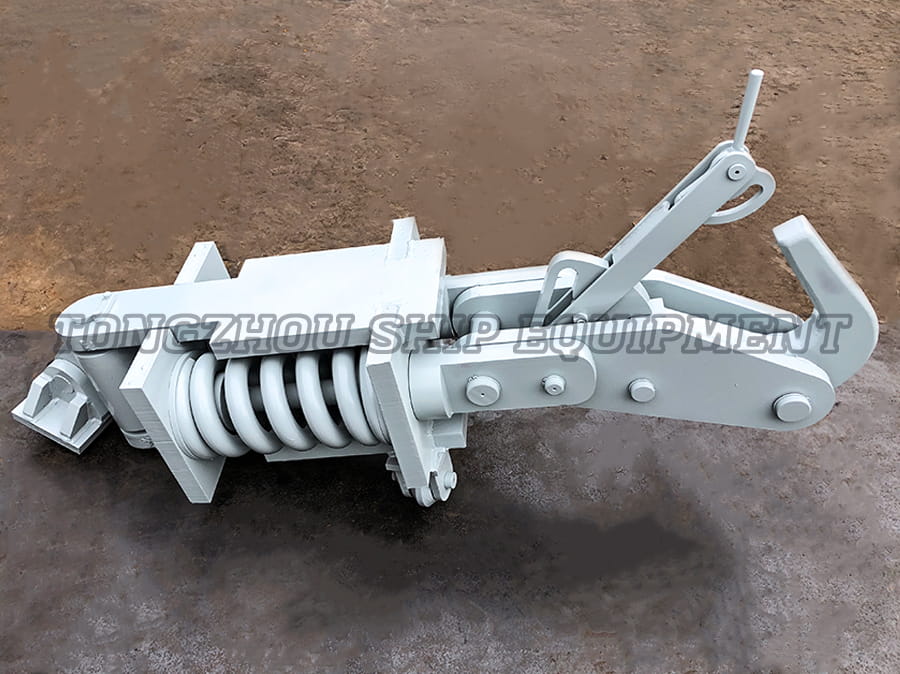
The toggle stopper, often referred to as a turnbuckle chain stopper, is a lightweight, manually operated device that uses a screw-tensioned claw to grip a chain link, making it an economical and adjustable choice for smaller vessels and as an emergency backup on larger ships. The mechanism consists of a threaded rod or turnbuckle with a claw-shaped hook at one end and a deck attachment point at the other. To set the stopper, the claw is placed over a vertical chain link and the turnbuckle is tightened by hand or with a bar until the claw compresses the link against a deck plate or stopper base. This screw action provides a known, repeatable preload and allows for fine adjustment to accommodate slight variations in chain position. A toggle anchor chain stopper is typically used with chain diameters up to about 50 millimeters and is often seen on coastal tankers, tugs, and inland waterway vessels. The main advantage is simplicity and low cost; the main disadvantage is that it requires manual tightening and is slower to engage and disengage than a pawl or hydraulic system. The threaded components must be kept well-greased to prevent galling and seizing in the marine environment.
4. Hydraulic Chain Stopper: The Remote-Controlled, High-Precision Choice
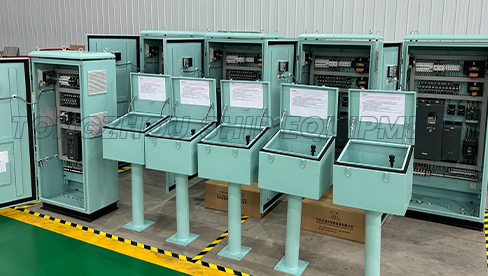
The hydraulic chain stopper employs one or more hydraulic cylinders to close powerful clamping jaws or a vertical wedge around the chain, enabling remote operation from the bridge or a central control panel and delivering precise, controllable holding force. This type of anchor chain stopper is increasingly specified for offshore supply vessels, dynamically positioned ships, naval vessels, and large passenger ships where the anchoring system is integrated into a centralized ship automation system. The hydraulic power unit can be located remotely, and the stopper can be opened or closed with the push of a button, eliminating the need for crew members to be on the exposed foredeck in heavy weather. Many hydraulic stoppers are equipped with position sensors that confirm full engagement to the control system and with pressure transducers that monitor the clamping force continuously. Some models also incorporate a chain tension measurement function, providing real-time data on the load being transferred through the stopper to the deck structure. The holding capacity can be scaled to match any chain size, and hydraulic stoppers are routinely built for chain diameters exceeding 150 millimeters on ultra-large vessels. The trade-off is higher initial cost, the need for a hydraulic power supply, and additional maintenance of the cylinders, hoses, and control valves.
| Stopper Type | Engagement Mechanism | Typical Chain Diameter Range | Key Advantage | Key Limitation |
|---|---|---|---|---|
| Guillotine Stopper | Vertical sliding wedge locks between links | 50–130 mm | Self-tightening, massive holding force | Manual operation; slower to engage/disengage |
| Roller Pawl Stopper | Spring-loaded pawl rides over chain, locks automatically | 10–40 mm | Hands-free hauling; very fast engagement | Lower holding capacity; pawl can jam if dirty |
| Toggle (Turnbuckle) Stopper | Screw-tensioned claw grips a chain link | 15–50 mm | Simple, adjustable, low cost | Slow manual operation; threads prone to corrosion |
| Hydraulic Chain Stopper | Hydraulic cylinders close clamp or wedge remotely | 50–150+ mm | Remote operation, force monitoring, precision | High cost; requires hydraulic power supply |
Selecting the Correct Anchor Chain Stopper for a Vessel
The selection of the appropriate anchor chain stopper depends on the vessel's chain diameter and grade, the required holding capacity as mandated by class rules, the expected frequency of anchoring operations, and whether remote operation or integration with a ship automation system is required. For a large oceangoing cargo vessel with a chain diameter of 73 millimeters or greater, a guillotine stopper is almost always the primary choice due to its unmatched holding power and robust, low-maintenance design. For a medium-sized offshore service vessel that anchors frequently in rough weather and where crew safety on the foredeck is a priority, a hydraulic chain stopper with remote bridge control is often specified despite the higher cost. For a coastal tug or a small passenger ferry, a roller pawl or toggle stopper provides adequate strength at a lower capital investment. Many classification societies, including Lloyd's Register and DNV, require that the selected anchor chain stopper be type-approved for the specific chain size and that its attachment to the deck be reinforced to distribute the full design load into the hull structure without permanent deformation.
Frequently Asked Questions About Anchor Chain Stoppers
What is the difference between an anchor chain stopper and a chain compressor?
An anchor chain stopper is a heavy structural device designed to hold the entire weight and dynamic load of the anchor and chain when stowed, with a holding capacity rated to a fraction of the chain's breaking strength. A chain compressor is a much lighter device that simply holds the chain against the windlass wildcat to prevent it from riding up during hauling. The two are not interchangeable, and a compressor must never be relied upon as the sole securing device for a housed anchor while the vessel is at sea.
Can a roller pawl stopper be used as the primary chain securing device on a large ship?
No. Roller pawl stoppers are intended as secondary or supplementary securing devices and are not rated for the full holding load required by classification societies for primary chain securing. On large vessels, a guillotine or hydraulic anchor chain stopper must serve as the primary securing device, and a roller pawl may be fitted as a convenience feature to assist with hauling operations.
How often should chain stoppers be inspected and maintained?
The anchor chain stopper should be visually inspected once per watch while at sea to confirm full engagement, and a more detailed examination of the wedge, pawl, hinge pins, and deck attachment welds should be performed monthly. At the five-year special survey, the stopper is typically stripped down for non-destructive testing of critical components. Any crack, deformation, or excessive corrosion wastage must be addressed before the vessel's safety certificates can be renewed.
From the compact roller pawl on a coastal tug to the massive hydraulic wedge on a deepwater drillship, the anchor chain stopper in its various forms is a non-negotiable safety device that stands between a securely housed anchor and the uncontrolled release of tons of ground tackle into the sea. Matching the stopper type to the vessel's chain size, operational profile, and automation level ensures reliable performance over decades of service in the harshest marine environments.