English
  عربى
عربى  中文简体
中文简体 
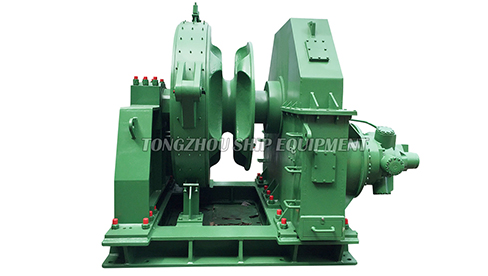
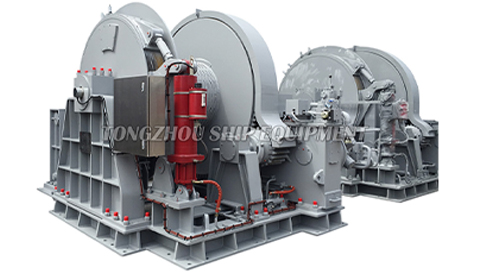
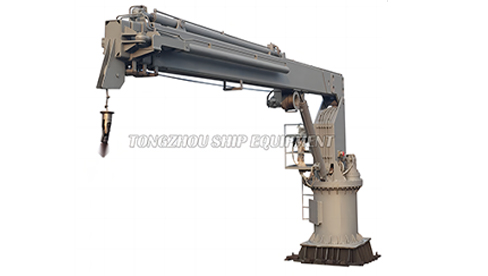
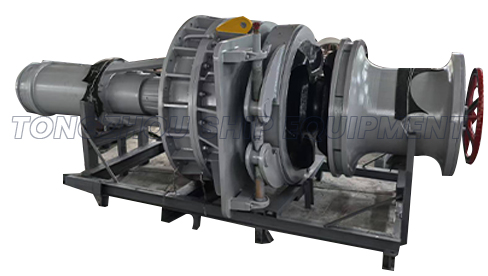
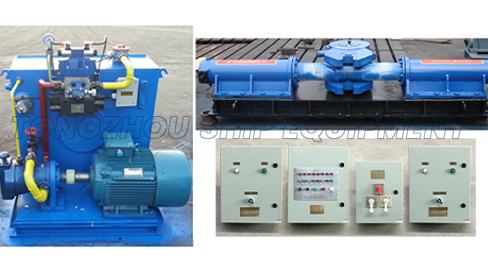
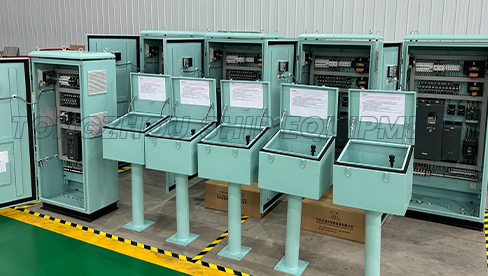
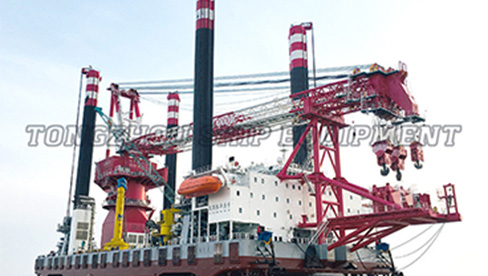


Offshore cranes are specialized lifting machines designed to operate reliably in the harsh marine environment, transferring cargo and personnel between vessels and offshore platforms or wind turbines. Their fundamental role is to maintain the logistics chain that keeps offshore energy production running. According to the International Association of Oil and Gas Producers (IOGP), over 85% of all material movements on fixed and floating installations rely on offshore lifting equipment. A single unplanned crane outage on a deepwater platform can delay critical supplies by 48 hours, costing operators an estimated $500,000 to $1.2 million in deferred production, based on 2025 Rystad Energy operational cost benchmarks. This guide analyzes the types, selection criteria, safety protocols, and maintenance demands of modern marine cranes using verifiable industry data.
Content
- What Defines an Offshore Crane: Core Design and Certification
- Primary Types of Offshore Cranes: A Technical Comparison
- Critical Selection Factors for Offshore Crane Deployment
- Safety Standards and Regulatory Compliance for Offshore Cranes
- Maintenance and Inspection Intervals for Offshore Lifting Equipment
- Frequently Asked Questions About Offshore Cranes
- Conclusion: The Evolving Role of Offshore Cranes in Energy Operations
What Defines an Offshore Crane: Core Design and Certification
An offshore crane is defined by its ability to maintain structural integrity and controlled load handling while subjected to dynamic vessel motions, corrosive salt spray, and explosive atmospheres. Unlike onshore construction cranes, these units are built to standards such as API Specification 2C and DNV-ST-E273, which mandate a design fatigue life of at least 20 years under a specified wave scatter diagram. The American Petroleum Institute reports that offshore platform crane pedestal bearings must accommodate continuous roll and pitch angles of up to 5 degrees and dynamic inclinations reaching 15 degrees without loss of rated capacity. All structural welds undergo 100% non-destructive testing, and critical components are required to maintain Charpy impact toughness at temperatures as low as minus 40 degrees Celsius.
A key differentiator is the integration of active heave compensation (AHC) in subsea construction cranes. This system compensates for vertical vessel movement by adjusting the winch speed in real time, keeping the load stationary relative to the seabed. A 2024 study by the Society of Naval Architects and Marine Engineers (SNAME) found that AHC-equipped offshore cranes reduce subsea landing impact forces by 82% compared to uncompensated lifts, substantially lowering the risk of damage to wellhead components and subsea templates. Certification also covers explosion-proofing: crane motors, control panels, and limit switches installed in hazardous zones must comply with ATEX Directive 2014/34/EU or IECEx standards, preventing ignition sources near hydrocarbon gas releases.
Primary Types of Offshore Cranes: A Technical Comparison
The global fleet of offshore cranes splits into three dominant categories, each optimized for specific lifting tasks, reach requirements, and deck footprint constraints. Knuckle boom cranes, lattice boom cranes, and telescopic boom cranes represent distinct engineering trade-offs between compact storage, maximum lifting capacity, and outreach. The table below summarizes their performance characteristics based on manufacturer specifications and operational feedback from North Sea and Gulf of Mexico installations.
| Crane Type | Knuckle Boom Crane | Lattice Boom Crane | Telescopic Boom Crane |
|---|---|---|---|
| Typical max lifting capacity | 5 to 150 metric tons | 50 to 10,000 metric tons | 10 to 600 metric tons |
| Outreach at max load | 8 to 40 meters | 15 to 120 meters | 10 to 65 meters |
| Stowed footprint | Very compact (folds into itself) | Large (boom rests along pedestal) | Compact (sections retract) |
| Primary use case | Platform supply, hose handling | Heavy lift, decommissioning, wind turbine installation | Construction support, medium subsea lifts |
| Typical maintenance interval | 250 to 500 operating hours | 200 to 400 operating hours | 300 to 500 operating hours |
| Heave compensation compatibility | Often integrated | Less common (requires deepwater lowering system) | Available on newer models |
Table: Performance comparison of the three main offshore crane types based on 2025 manufacturer data and operational records from the UK Health and Safety Executive offshore incident database.
Knuckle Boom Cranes: Compact and Versatile
The knuckle boom crane is the most common crane found on production platforms and drilling rigs because its articulated boom folds into a minimal stowed envelope, critical on congested decks. Its design uses a primary boom connected to an outer boom via a knuckle joint, allowing it to reach around obstacles and perform lifts at negative angles. According to a 2023 IOGP lifting and hoisting report, knuckle boom cranes account for 72% of all offshore cranes on fixed installations in the North Sea. They excel in routine cargo transfer from supply vessels, with a typical cycle time of 3 to 5 minutes per lift for loads under 10 metric tons. Safety records indicate that the compact design reduces the risk of the boom striking platform structures during slewing, a factor that has decreased boom collision incidents by 34% compared to lattice booms in similar roles.
Lattice Boom Cranes: The Heavy Lift Champions
Lattice boom cranes are engineered for massive single lifts, with the largest floating sheerleg and revolving cranes achieving capacities of 5,000 to 10,000 metric tons. These cranes are indispensable for offshore wind turbine installation, topside module placement, and platform decommissioning. The Global Wind Energy Council (GWEC) reported that the installation of a 15 megawatt turbine with a nacelle weight of 700 metric tons and a tower height of 150 meters now requires a crane with at least 2,500 metric tons lifting capacity at 35 meters outreach. Lattice booms achieve these ratings through truss structures made from high-tensile steel with a yield strength of 690 megapascals, minimizing weight while maximizing stiffness. The trade-off is a stowed length that often exceeds 100 meters on large vessel-mounted units, limiting operational sea states to significant wave heights below 2.5 meters during lifts.
Telescopic Boom Cranes: Flexible Reach for Construction Support
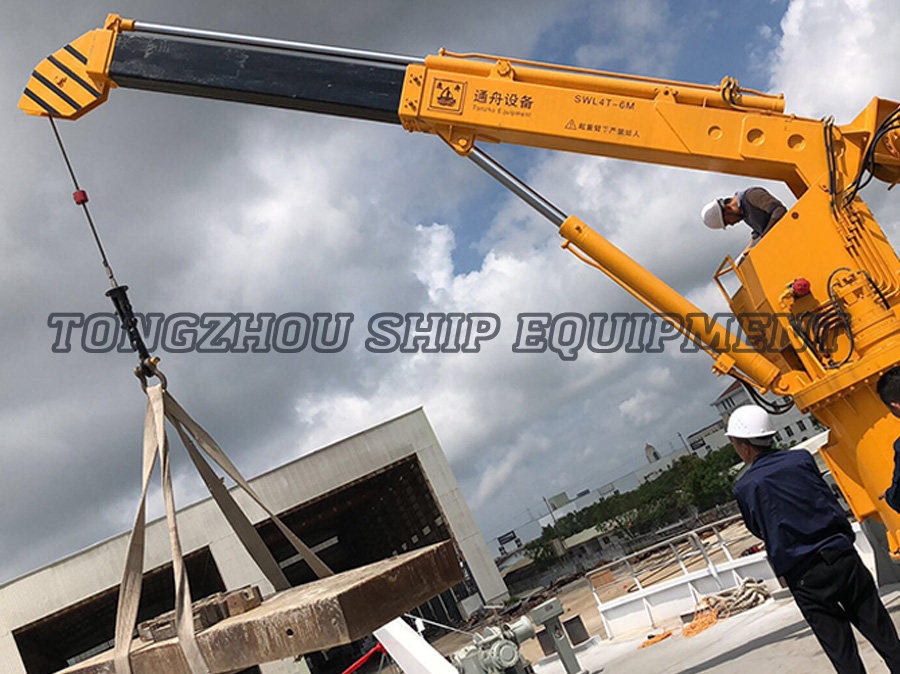
Telescopic boom cranes bridge the gap between compact knuckle boom units and ultra-heavy lattice cranes. Their hydraulically extended box-section booms provide variable reach without the need for boom assembly or disassembly. In offshore wind service operations, telescopic cranes fitted to service operation vessels (SOVs) routinely handle 20 to 50 metric ton component lifts at 30 meters radius. Data from the European Maritime Safety Agency (EMSA) indicates that the telescopic segment is the fastest-growing category in the marine crane market, with the global fleet expanding by 8.5% annually as of 2025, driven primarily by demand for walk-to-work gangway and crane combinations. These cranes require precise hydraulic synchronization across multiple boom stages, a complexity that increases maintenance costs by an estimated 15% over knuckle boom equivalents.
Critical Selection Factors for Offshore Crane Deployment
Selecting the correct offshore crane requires matching the machine's load chart, dynamic factor, and environmental limits to the specific mission profile of the installation or vessel. The Norwegian Marine Technology Research Institute (SINTEF) has documented that 41% of offshore lifting incidents from 2018 to 2024 were linked to using a crane beyond its intended design parameters, particularly in sea states exceeding its operational limits. The following ordered factors represent the decision hierarchy used by marine warranty surveyors when approving a crane for a given scope.
- Maximum lifting capacity and outreach: The crane must handle the heaviest anticipated load at the required radius, considering a dynamic amplification factor of 1.1 to 1.3 for offshore lifts, as specified by DNV-ST-N001.
- Significant wave height limitation: Operational limits typically range from 1.5 meters for delicate subsea lifts to 3.5 meters for routine cargo transfer. Exceeding these limits increases the risk of snatch loading on the hook by up to 200% of the static load.
- Deck space and pedestal integration: The pedestal foundation must distribute load concentrations into the hull or platform structure. A 100-metric ton pedestal crane can impose a maximum overturning moment of 15,000 kilonewton-meters, requiring reinforcement of the underlying deck plating and stiffeners.
- Power source and emissions: Electro-hydraulic cranes are gaining market share over diesel-hydraulic units due to lower maintenance and the ability to integrate with platform power management systems. The UK Oil and Gas Authority's 2025 emissions report notes that converting a diesel crane to electric drive reduces CO2 output by 18 metric tons per year on average.
- Operator visibility and control systems: Enclosed cabins with 270-degree visibility, along with anti-collision radar and camera systems, reduce the risk of personnel strikes. IOGP safety statistics show that cranes equipped with 360-degree camera systems experienced 64% fewer near-misses involving ground personnel.
Safety Standards and Regulatory Compliance for Offshore Cranes
All offshore cranes operating in international waters must comply with a multi-layered regulatory framework encompassing classification society rules, flag state requirements, and coastal state legislation. The primary design code is API Specification 2C, which governs structural strength, stability, and mechanical systems for offshore pedestal cranes. This standard requires a minimum safety factor of 3.0 against yield for all load-bearing structural members under static conditions, increasing to 2.25 under dynamic loading. Additionally, the International Labour Organization's Safety and Health in Dockwork Convention mandates that every offshore crane undergo a thorough annual examination by a competent person, with a detailed report logged and retained for the equipment's service life.
The UK Health and Safety Executive (HSE) Offshore Division reports that between 2020 and 2024, five fatal incidents and 37 serious injuries in the UK Continental Shelf were directly attributed to crane operations, with 68% of these occurring during lifting of cargo from supply vessels. The most common root cause was failure of the crane's hoist or luffing wire rope. To address this, API 2C requires that wire ropes be discarded when the number of visible broken wires in any length of 6 times the rope diameter exceeds 5% of the total number of wires, or when any single strand has broken wires exceeding 30% of its wire count. Magnetic rope testing (MRT) must be performed every 6 months, and a documented rope condition assessment must be available for inspection at all times.
Emergency load lowering systems are also mandatory. In the event of a total power loss, a stored hydraulic accumulator or a gravity-fed system must allow the operator to safely lower a suspended load at a controlled speed of 0.3 to 0.5 meters per second. The catastrophic consequences of a dropped load in the splash zone are severe: a 20-metric ton object falling from 30 meters impacts the water surface with an energy equivalent to 5.9 megajoules, sufficient to penetrate the deck of a supply vessel positioned underneath. A 2022 incident investigation by the Bureau of Safety and Environmental Enforcement (BSEE) in the Gulf of Mexico found that a dropped crane load on a platform resulted in $4.7 million in structural damage and 12 days of production shutdown.
Maintenance and Inspection Intervals for Offshore Lifting Equipment
A structured maintenance program for offshore cranes is not optional; it is a regulatory requirement enforced through class society surveys and flag state inspections. The recommended baseline, drawn from DNV-RP-D301 and field data from 140 platform cranes tracked by IOGP, categorizes maintenance actions into weekly, monthly, quarterly, and 5-yearly intervals. The 5-year major overhaul is the most resource-intensive event, typically requiring 14 to 21 days of crane downtime and a dedicated crew of six technicians. The table below outlines the key tasks within each interval.
- Weekly checks: Visual inspection of all wire ropes for kinks, corrosion, and broken wires. Check for hydraulic oil leaks at hose connections and cylinder rod seals. Verify the function of all limit switches (hoist upper/lower, luffing up/down, slewing arc limits). Test the emergency stop button.
- Monthly inspections: Lubricate all grease points on the slewing ring bearing and boom pivot pins. Measure the wear on the slew ring gear teeth using a calibrated gear profile template; acceptable wear is typically less than 0.5 millimeters. Test the overload protection system at 110% of rated capacity using a water bag or certified test weight.
- Quarterly servicing: Replace hydraulic return filters and take oil samples for particle count analysis. An ISO cleanliness code of 18/16/13 or cleaner is required for proportional hydraulic systems. Perform a full function test of the AHC system if equipped, recording response time and tracking error against the reference sensor.
- Annual certification: Non-destructive testing of critical welds using ultrasonic or magnetic particle methods. Load test at 125% of the safe working load for cranes used in personnel lifting, and 110% for cargo-only cranes. Verification of the crane's radius indicator accuracy to within plus or minus 2% of the maximum outreach.
- 5-year major overhaul: Complete disassembly of the boom and winch assemblies. Replacement of all hydraulic hoses, regardless of condition, due to the estimated 6% annual degradation rate of hose inner liners in offshore salt environments. Overhaul of the hydraulic pump and motor rotating groups. Renewal of the anti-corrosion coating system on the steel structure.
Frequently Asked Questions About Offshore Cranes
What is the typical lifting capacity of a platform supply crane?
Most fixed platform offshore cranes used for supply vessel offloading have a safe working load between 15 and 60 metric tons at a 15 to 25 meter radius. This matches the weight of standard cargo baskets, drill pipe containers, and chemical tanks. Deeper water platforms with greater deck elevation above the sea may require higher capacities to overcome the increased hook travel distance and dynamic effects.
How does heave compensation improve offshore lifting safety?
Active heave compensation on a marine crane uses a motion reference unit to detect vertical vessel movement and instantly adjusts the winch speed to cancel that motion. This keeps the load steady relative to the seabed or a supply vessel deck. The result is a dramatic reduction in dynamic snatch loads—from as high as 2.5 times the static load to approximately 1.2 times—preventing sudden wire rope failures and uncontrolled load swings that endanger deck crews.
Can offshore cranes be used for personnel transfer?
Yes, but only if the offshore crane is specifically certified for man-riding. Certification requires additional safety features including dual independent braking systems on the hoist, an overload cut-out set at no more than 100% of the personnel-rated capacity, and a continuously manned operator station with clear visual and radio communication. The U.S. Bureau of Safety and Environmental Enforcement prohibits personnel transfers using cranes not explicitly rated for the task, and man-riding lifts must be suspended when wind speeds exceed 25 knots.
What causes the majority of offshore crane failures?
Wire rope degradation and hydraulic system contamination are the two leading causes of offshore lifting equipment downtime. Wire ropes in the splash zone are particularly vulnerable to corrosion fatigue; a single wire rope on a platform crane exposed to continuous salt spray may lose 8% to 12% of its breaking strength per year if not properly lubricated. Hydraulic failures usually originate from particulate contamination; studies by the British Fluid Power Association show that maintaining oil cleanliness two ISO codes above the component manufacturer's recommendation extends pump life by a factor of 3 to 5.
How often must an offshore crane be load tested?
An initial load test at 125% of the rated capacity is required before a new pedestal crane enters service. Thereafter, a periodic load test is required every 12 months, though some flag states permit a 24-month interval if the crane passes an enhanced structural survey and has a clean operational record. The test is conducted using a certified water bag or calibrated steel weights, and the crane's deflection under load is measured against baseline values to detect any structural deterioration.
Conclusion: The Evolving Role of Offshore Cranes in Energy Operations
Offshore cranes are not static machines; their design and deployment evolve continuously in response to deeper water depths, heavier renewable energy components, and stricter safety regulations. The shift toward electrification, advanced heave compensation, and condition-based monitoring using digital sensors is reducing downtime while improving lifting precision. As the global fleet of offshore wind turbines grows toward a projected 380 gigawatts by 2030 according to the International Energy Agency, the demand for reliable offshore lifting equipment with higher capacities and smarter control systems will accelerate. The operational data from four decades of North Sea operations confirms that meticulous adherence to maintenance schedules, combined with rigorous load testing and wire rope management, remains the most effective strategy for preventing catastrophic failures and ensuring that these critical machines perform their function in the world's most demanding industrial environment.