English
  عربى
عربى  中文简体
中文简体 
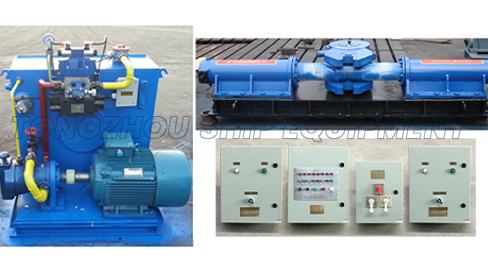
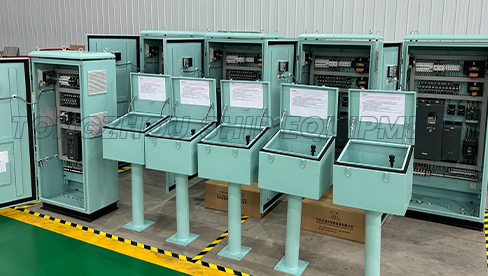
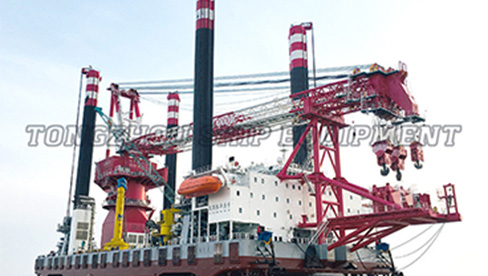


A rudder stock is the vertical shaft that connects the rudder blade to the ship's steering gear. It carries both the torque from the steering gear and the bending loads from the water, which makes it one of the most safety-critical components on a vessel. For owners and operators, the practical summary is simple: choose the right material, inspect the shaft regularly, and replace it without hesitation when damage passes safe limits. This article explains what a rudder stock is, which materials work best, what usually fails, and when to repair or replace it.
Content
What Is a Rudder Stock and Why Does It Matter?
The rudder stock is the load-bearing spine of the steering system. It runs vertically from the steering gear or tiller inside the hull, passes through a watertight rudder trunk, and ends inside the rudder blade. The upper end is machined with a taper, keyway, spline, or flange to receive the steering gear output arm; the lower end is joined to the blade by a keyed taper, a bolted flange, or a structural adhesive bond in composite construction. Bearings support the shaft at the carrier and rudder port, and often again inside the skeg.
The stock resists torsion and bending at the same time. Torsion comes from the steering gear rotating the shaft; bending comes from hydrodynamic pressure pushing the blade during turns. Classification societies such as ABS, DNV, LR, and CCS publish rule formulas that set a minimum stock diameter from rudder force, torque, bearing span, and material yield strength. Any crack, bend, or section loss changes the stress state and can turn a mild steering issue into a total loss of steering control.
Rudder Stock Materials and How to Choose
For most commercial, fishing, and larger recreational vessels, a high-strength stainless steel, either a duplex or precipitation-hardening grade, is the best choice for a new rudder stock. Standard 316 stainless remains acceptable for small craft with low steering torque and for repairs that must match the original material, but it needs a larger diameter to carry the same load.
| Material grade | Typical yield strength | Corrosion behavior | Typical application |
|---|---|---|---|
| 316 / 316L stainless steel | 205-290 MPa in bar form | Good general resistance; pitting and crevice attack in stagnant or warm seawater | Small craft, low torque, budget replacements |
| Duplex stainless (such as 329) | About 450-550 MPa | Better pitting resistance than 316 | Fishing vessels, tugs, medium-size commercial craft |
| High-strength precipitation-hardening stainless | About 760 MPa or more | Very good when correctly heat-treated; welding requires re-treatment | Large rudders, high-speed craft, heavy bending loads |
| Carbon-fiber composite | No yield point; very high specific strength | No corrosion, but galvanic care needed at metal fittings | Performance yachts and light-displacement new builds |
Bar or tube form, heat-treatment condition, and the connection method to the blade all affect the final allowable stress. Material certificates and classification approval should be verified before manufacture, because a generic grade name does not guarantee a safe stock.
Common Rudder Stock Failure Modes
Most rudder stock problems fall into four groups: impact bending, corrosion damage, fatigue cracking, and bearing or seal wear. Each group has different causes, symptoms, and repair costs.
Impact Bending After Grounding
A visibly bent stock should only be straightened in very limited cases; normally it must be replaced. A grounding pushes the blade sideways and can bend the shaft by 5 to 7 degrees, as is often reported in owner forums. Even that range causes stiff steering, rapid seal wear, and hidden micro-cracks at the blade connection.
Corrosion and Section Loss
Corrosion reduces the effective diameter of the stock, and the diameter carries the load. Pitting and crevice attack typically develop in the rudder trunk, at the seal area, between blade and stock, or under bearing sleeves. Rust streaks at the blade-to-stock joint are usually the first visible warning.
Fatigue Cracking
Fatigue cracks start where the cross-section changes, such as at keyways, the base of the taper, or old weld repairs. Visual inspection alone will not reveal them; dye penetrant and ultrasonic testing are the practical detection tools, and any confirmed crack means the stock must be taken out of service.
Bearing and Seal Wear
Worn bearings turn a steering problem into a stock problem. Excess clearance lets the shaft flex at the bearing edge, which wears the journal and accelerates fatigue. Typical signs are knocking when going astern, water in the rudder trunk, or oil leaking past the top seal, and a scored journal needs machining or a sleeve, not just a new seal.
| Symptom | Likely cause | Recommended action |
|---|---|---|
| Knock or clunk when going astern | Worn bearing, loose key or taper | Check clearances; re-torque the locknut; inspect the key |
| Water at the rudder trunk or oil at the top seal | Worn seal or scored stock surface | Replace the seal; measure the journal; machine or sleeve if scored |
| Blade wobble or visible bend | Grounding impact | Dial-gauge the shaft; run NDT; plan replacement if damage is beyond limits |
| Rust streaks at the blade-to-stock joint | Crevice corrosion | Open the joint; measure thickness; assess section loss |
Repair or Replace?
Replace the stock when a crack is present, when the bend is too large for controlled straightening, or when corrosion has removed more than about 10 percent of the original diameter. Localized damage can sometimes be repaired by approved welding, a two-piece sleeve, or machining, but every repair should be reviewed with the vessel's classification society.
Straightening
Straightening is rarely a permanent repair. A deviation of about one degree at a bearing may be pressed back and verified with NDT, but a 5 to 7 degree bend leaves residual stress and can start cracks that appear only after the vessel returns to sea.
Sleeving and Build-Up Repairs
Local section loss can be restored with a two-piece machined sleeve, an approach proven on severely corroded rudder stocks. The sleeve is rolled from plate, machined to tolerance, and bonded or clamped around the cleaned shaft. Welding build-up is also possible, but high-strength stainless grades may lose properties after welding unless heat treatment is repeated.
Manufacturing a New Stock
A new stock machined from certified bar or forging is the safest permanent answer for large or heavily loaded rudders. An expedited workshop can deliver a new rudder stock and pintle in about two working weeks, which shows that replacement does not have to mean a long lay-up. The new part needs mill certificates, heat-treatment records, and final dimensional inspection.
When deciding between repair and replacement, review these factors:
- Classification requirements, which may forbid repairs on certain damage patterns.
- Vessel age and remaining service life compared with the cost of the part.
- Cost and availability of dry-dock time versus the repair itself.
- Availability of original drawings and material certificates for the existing stock.
- Condition of the rudder blade, which can be reused only if it is sound.
How the Rudder Stock Connects to the Steering Gear
The connection between the rudder stock and the steering gear is usually a precision taper with a keyway and locknut at the top of the shaft. The tiller arm or fork hub is pressed over the taper, and the key carries the torque. This connection must never slip under full rudder load.
Fork-Type Hydraulic Steering Gear
Fork-type hydraulic steering gears move a two-arm fork keyed to the rudder stock, with one hydraulic cylinder on each arm, and suit medium to large rudder torques. The gear output centerline lines up with the stock axis, and the cylinder pair delivers stronger and smoother directional control than manual steering for larger vessels.
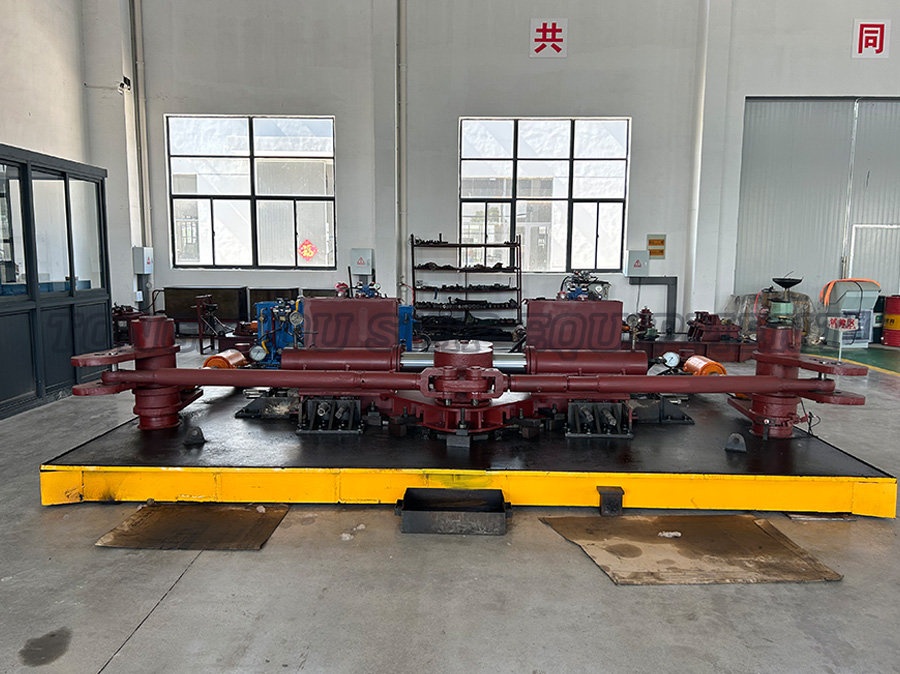 Fork Type Hydraulic Steering Gear for Medium to Large VesselsThis fork-type hydraulic steering gear uses two cylinders on a fork keyed to the rudder stock, delivering strong, smooth control for medium to large rudder torques. It suits larger vessels needing reliable directional power.View Product →
Swing-Cylinder Hydraulic Steering Gear
Swing-cylinder gears drive a steering arm on the stock through a link, using one or two cylinders, and are a compact choice for lower torque ranges. They suit small and medium craft where space is tight, and they match well with smaller rudder stock diameters.
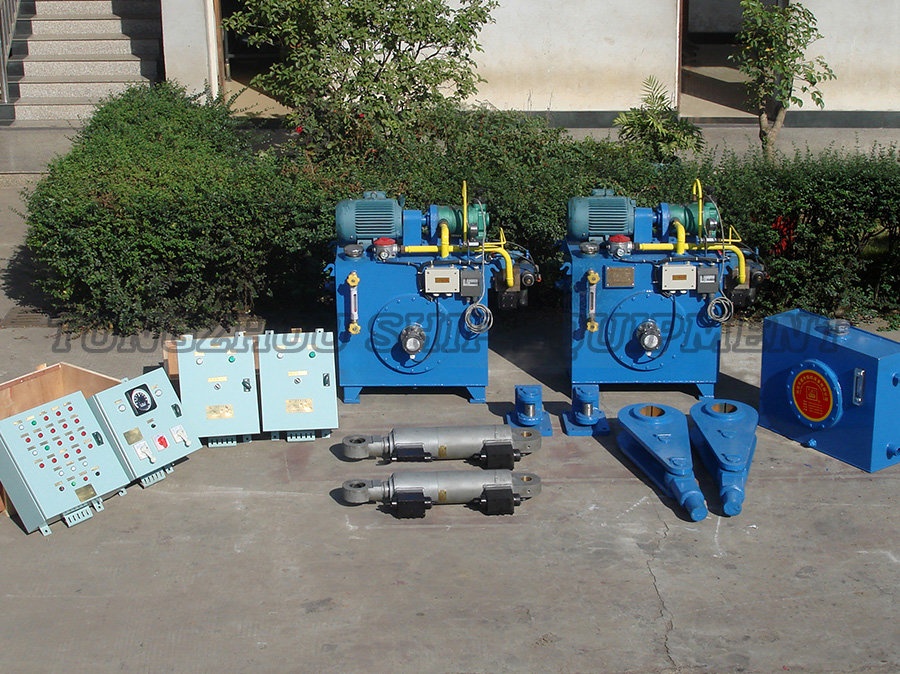 Swing Cylinder Hydraulic Steering Gear for Compact InstallationsThis swing-cylinder steering gear drives a steering arm through a link with one or two cylinders, offering a compact solution for lower torque ranges. Ideal for small to medium craft where space is limited and rudder stock diameters are smaller.View Product →
Matching Gear Torque and Stock Diameter
The steering gear torque rating and the rudder stock diameter must be selected together, because the keyway and taper are usually the weakest links in the torque path. If the gear output exceeds the torsional capacity of the stock, the key shears or the shaft twists. Classification formulas, gear torque, and stock material should appear in the same calculation.
| Gear type | Typical torque range | Stock connection | Typical vessel size |
|---|---|---|---|
| Swing-cylinder | 8-600 kN·m | Steering arm keyed to stock, driven by a link | Small and medium craft |
| Fork-type | 25-1350 kN·m | Fork hub over the taper, key and locknut | Medium to larger vessels |
Maintenance and Inspection
A yearly visual check, plus a deeper inspection at every dry-docking, catches the great majority of rudder stock problems before they become emergencies.
- Verify the locknut torque and key condition at the taper.
- Measure rudder blade movement against the manufacturer's bearing clearance limits.
- Inspect the seal area for corrosion, scoring, or leakage.
- Run dye penetrant on the blade-to-stock connection after any grounding.
- Perform ultrasonic thickness checks at the rudder port every five years.
- Record steering effort, helm play, and noise to spot gradual changes.
Frequently Asked Questions
Can a bent rudder stock be straightened?
Only a very small bend, about one degree at a bearing or joint, may be straightened, and only with NDT verification and classification approval. The commonly reported 5 to 7 degree bend is beyond repair and should lead to replacement.
What is the best material for a rudder stock?
A high-strength stainless steel, duplex or precipitation-hardening grade, is the best choice for most installations because it combines strength, corrosion resistance, and fatigue life. Standard 316 is adequate only for small craft and low rudder loads.
How do I know if my rudder stock is worn before it fails?
Watch for steering play, knocking when going astern, water or oil at the rudder trunk, rust streaks along the shaft, and a change in rudder response. Any of these signs justifies a dry-dock inspection of the bearings, taper, and blade connection.
Can I reuse the old rudder blade with a new stock?
Yes, if the blade is crack-free and still thick enough at the connection. The blade bore or flange must be re-machined to match the new stock, and the key position and bolt pattern must match the original arrangement.
Rudder stock selection is a safety-critical engineering decision, not a spare-parts purchase. Correct material, a sound connection, and a consistent inspection schedule keep the steering system reliable for decades. When planning a new stock or a steering gear upgrade, it helps to work with a manufacturer that understands the whole transmission chain. Xinghua Tongzhou Ship Equipment has designed and produced deck machinery and hydraulic steering equipment since 2003, with recognition from Chinese and international classification societies. Contact the team with rudder dimensions, blade area, and vessel particulars for a practical recommendation.