English
  عربى
عربى  中文简体
中文简体 
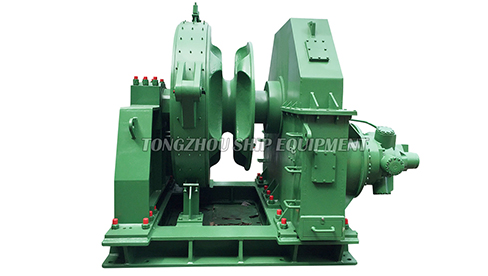
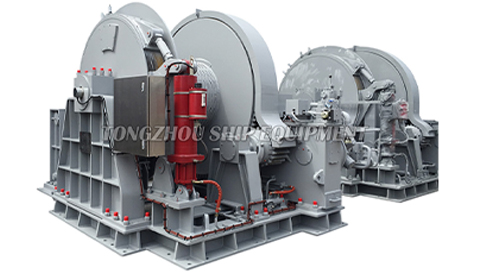
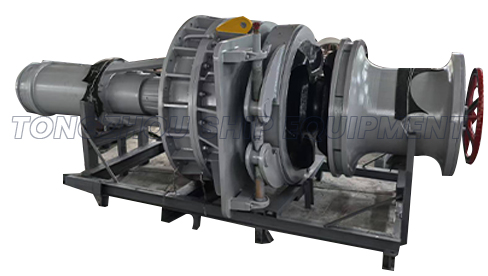


A winch brake is the device that holds a winch drum, controls how fast line pays out, and releases line only when tension exceeds a preset limit. It is not a parking lock. On a loaded marine winch, the brake is the difference between controlled mooring and an uncontrolled run-out of wire or rope.
Most marine winches use two brake systems: an input brake on the motor or drive shaft, and a primary brake on the drum. Each has a different job, a different setting, and a different failure mode. The sections below explain how they work together, how their settings are chosen, and what to inspect before a vessel sails.
Content
What the Winch Brake Does Under Load
The winch brake performs three jobs: it holds the drum when power is removed, it renders line at a controlled tension, and it absorbs energy without shock loading the drive train. A brake that only holds is not sufficient for mooring or anchor handling, because line tension can rise quickly as a vessel moves against its moorings.
When a winch is hauling in, the brake is released and the drive controls the load. When the control lever returns to neutral, the brake must reapply automatically. If the drum is left engaged and the brake band is set too tight, the winch will not render at its designed load. If it is set too loose, the drum can creep and the vessel can drift. The correct setting is therefore a narrow window, not a matter of tightening until the drum stops moving.
Input Brake vs Primary Brake
The input brake and primary brake are not interchangeable. They act on different parts of the drive train and are set to different load limits.
| Feature | Input Brake | Primary Brake |
|---|---|---|
| Location | Drive motor or input shaft | Winch drum or drum shaft |
| Main role | Hold the drive train when power is off | Hold and render line at the drum |
| Typical type | Spring-applied, electromagnet-released disc brake | Band brake, or disc brake on high-duty winches |
| Holding capacity | At least 1.5 times drum load under ISO 3730 for electric drives | Usually set at 60% of ship design MBL for mooring winches |
| Rendering behavior | Not normally used as the primary rendering brake | Renders line when tension exceeds the set limit |
| Failure mode | Cannot release if coil or power supply fails | Contaminated friction surface, worn band, incorrect spring tension |
An input brake is fail-safe because springs apply it when power is off. Power is required to release it, so a power failure leaves the brake applied. However, an input brake should not be used as the only holding brake for a mooring winch. If the drum is left engaged and the primary brake is set, both brakes can work together and prevent the winch from rendering at its designed line load.
The primary brake is the one that protects the mooring line. It is designed to render before line loads become excessive. On a mooring winch, the primary brake holding load is commonly set at 60% of the ship design minimum breaking load, or MBL. A brake that holds too long can part the line; a brake that renders too early lets the vessel move too far.
How Brake Settings Are Determined
Brake settings follow the winch duty and the vessel design load, not the maximum strength of the line. A common mistake is to set the brake to hold the line breaking strength, which removes the rendering protection and can overload the winch foundation.
Mooring Winches
For mooring winches, the primary brake is set to render at about 60% of the ship design MBL. This keeps normal mooring tension below the brake release point, while allowing the brake to shed load before the line reaches a dangerous tension. The render range should be small. A brake that renders several tonnes below its set point will let the vessel move more than necessary in gusts or passing ship waves.
Anchor Handling and Towing Winches
Anchor handling and towing winches use higher-duty brakes, often disc or multi-disc types, because they must control high dynamic loads and frequent render events. Their settings are based on the winch rated pull, the line diameter, and the operating weather window. These winches usually have a primary brake on each drum, and the input brake remains a holding brake rather than a rendering brake.
Electric Drive Requirements
ISO 3730 requires all electric drive motors to have an automatic braking system with a holding capacity of at least 1.5 times the drum load. This input brake is in addition to the primary winch brake. It prevents the motor from freewheeling when power is removed and the line from running out under its own weight.
Brake Types: Band, Disc, and Multi-Disc
Band brakes remain the standard primary brake for mooring winches, while disc brakes dominate input brakes and high-duty anchor handling winches. The choice depends on duty cycle, required precision, and available installation space.
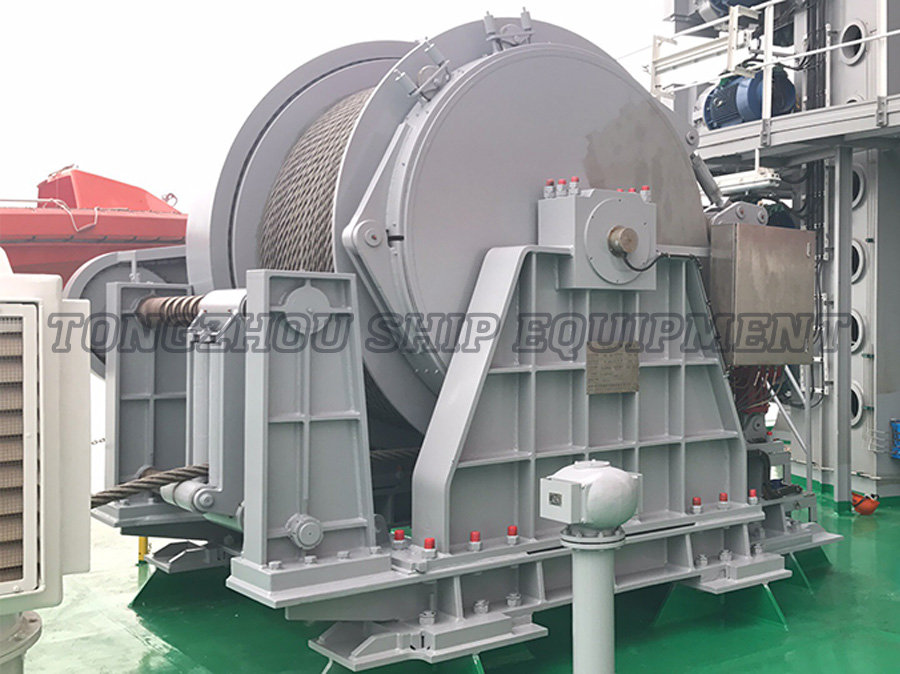
A band brake wraps a friction lining around the outside of a drum or brake wheel. It provides a large friction area, handles high torque, and can be adjusted through spring and linkage settings. It is simple and robust, but it can be sensitive to contamination and wear. A band brake that becomes glazed or oil-soaked may hold poorly or render at the wrong load.
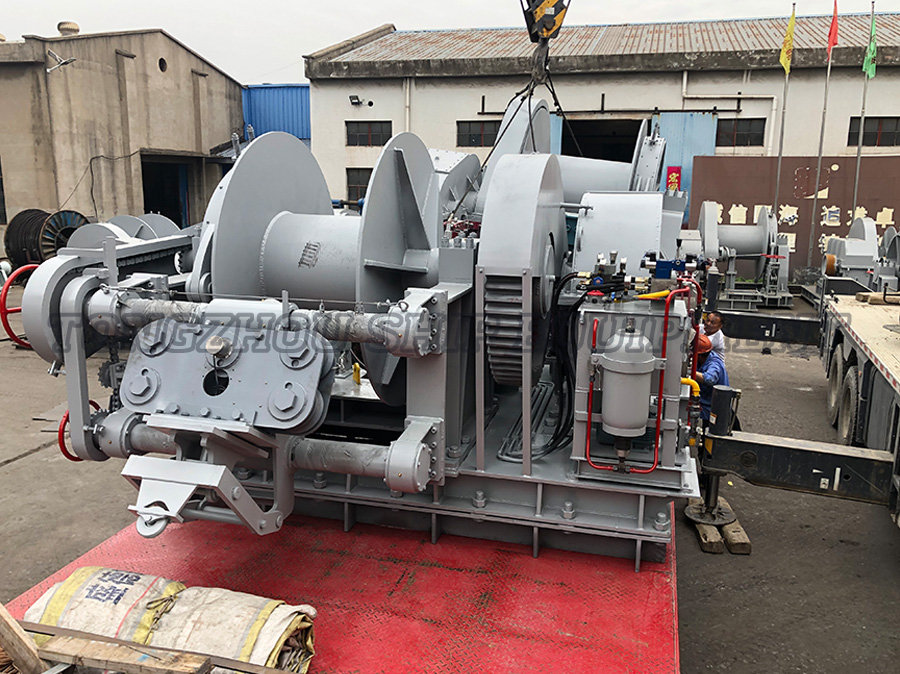
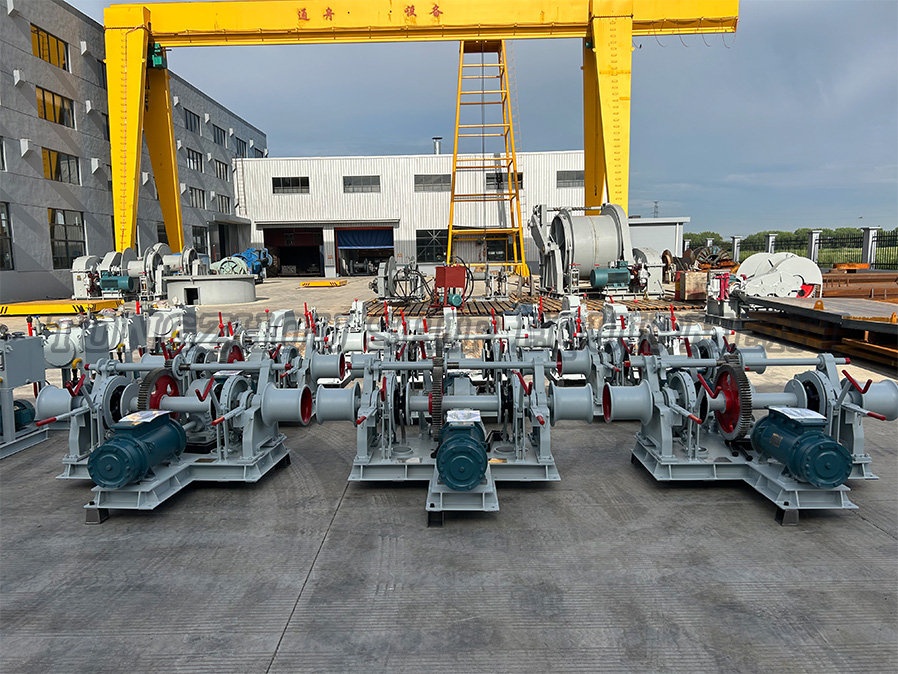
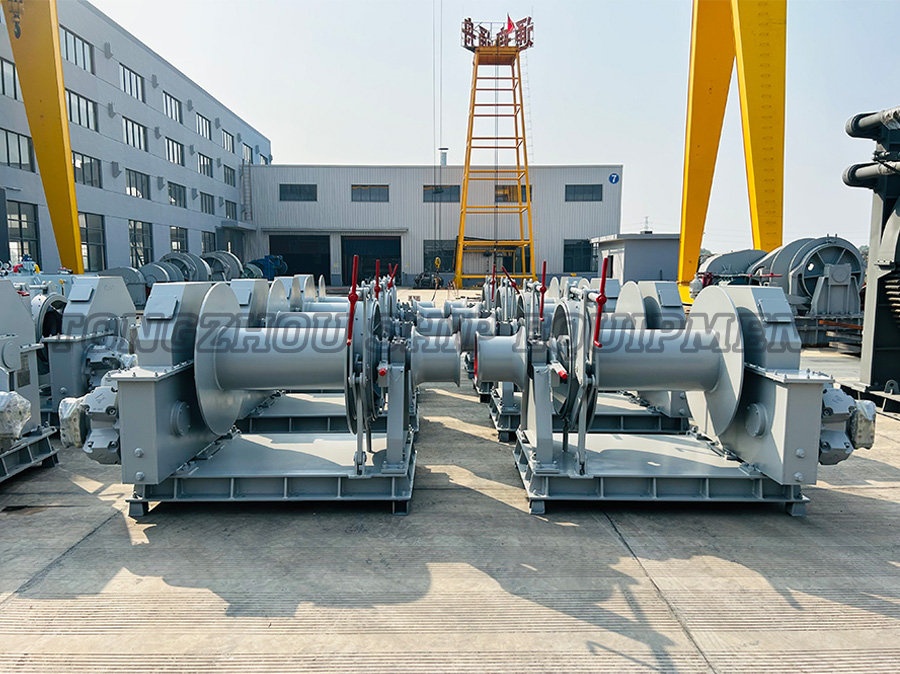 Marine Hydraulic Winch Category and Model ListingCategory lists Hydraulic Winch 01-09 with inquiry links, covering marine hydraulic winches for ship loading, anchoring, mooring, lifting, and offshore operations.View Product →
Disc brakes use a caliper that applies friction to a disc. They are common as input brakes because they are compact and can be released electrically. They are also used as primary brakes on high-duty anchor handling and towage winches, where precise setting and heat dissipation matter. Disc brakes work equally well in either direction and are less affected by drum diameter than band brakes. Multi-disc brakes stack several friction discs in a compact housing and are often used where high torque is needed in a small space.
Matching the Brake to the Drive
Hydraulic, electric, and diesel drives place different demands on the brake system. The brake type, release method, and setting range should be selected together with the drive, not added as an afterthought.
Hydraulic Drives
Hydraulic drives can hold a load through the motor and control valve, but they still need a primary drum brake for rendering and emergency holding. A hydraulic motor may creep internally, so the primary brake must be able to hold the drum when the control valve is centered. Hydraulic brake release is often powered by the same hydraulic circuit, which means a loss of pressure can apply the brake if the system is designed as fail-safe.
Electric Drives
Electric drives require an input brake because an AC motor can freewheel when power is removed. The input brake is spring-applied and electromagnet-released. When the control lever is in heave or render, power releases the brake. When the lever returns to neutral or power fails, the brake applies. This is why electric winches are often chosen for applications where automatic holding and simple control are important.
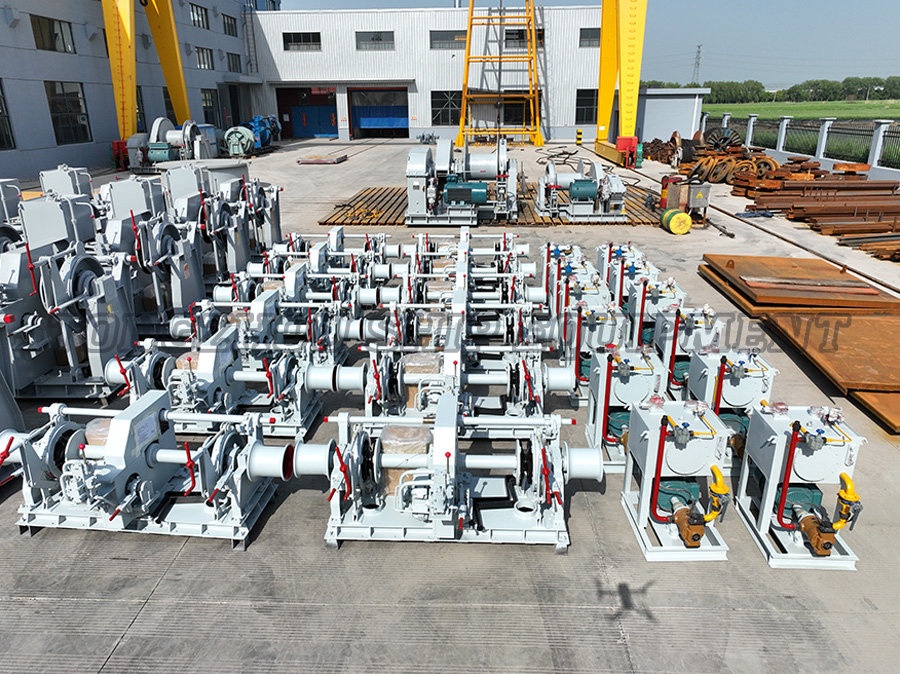
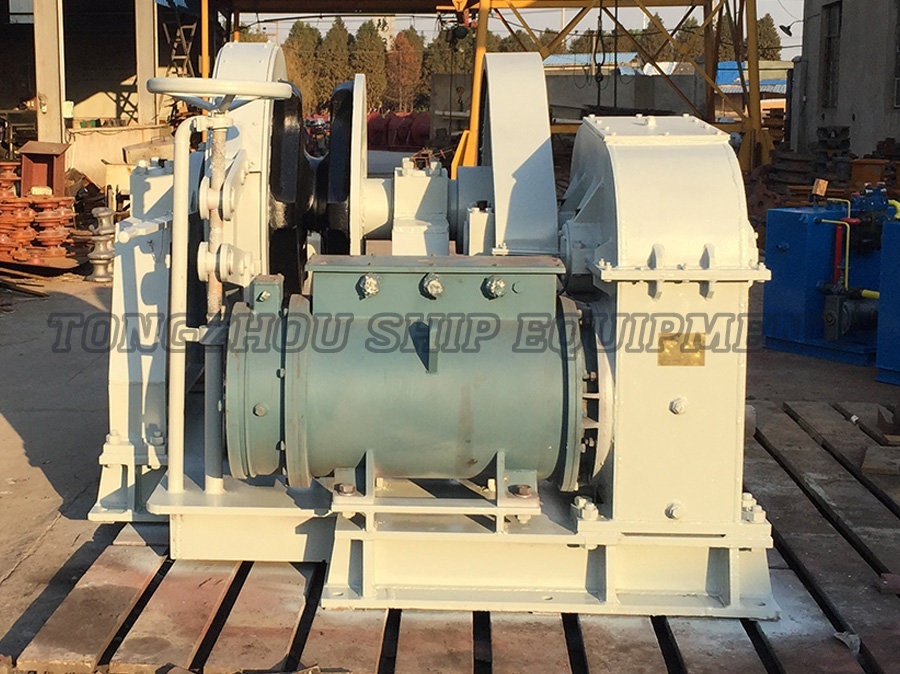
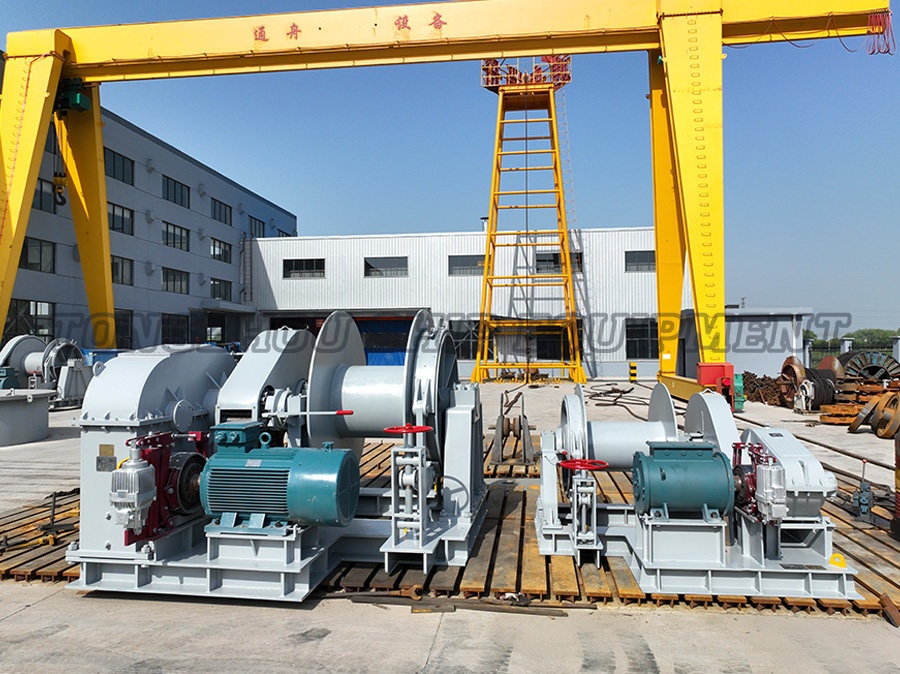 Marine Electric Winch Category and Product ListingsCategory lists Electric Winches 01-09 for ships and boats, covering anchoring, mooring, towing, and cargo handling with motor control for safe operation.View Product →
Diesel Drives
Diesel drives may use a mechanical or hydraulic brake on the output shaft, with the engine or clutch providing the holding function. A separate primary brake is still needed on the drum if the winch must render at a controlled load. Diesel winches are common where external electric power is not available, but the brake setting and release mechanism must be accessible for inspection.
Common Failure Points and Maintenance Checks
Most winch brake failures trace back to contaminated friction surfaces, incorrect setting, or worn linkages, not to a sudden material failure. A brake that has worked for years can still fail a load test because the friction coefficient has changed.
Friction lining contamination is the most frequent cause of poor holding. Oil, grease, salt, and rust can reduce the friction coefficient. A lining that looks thick may still be glazed and unable to hold its rated load. Band brakes are especially vulnerable because the lining is exposed to the drum surface and the surrounding deck environment.
Incorrect setting is the second common cause. A brake adjusted by feel may hold too tight and prevent rendering, or hold too loose and allow creep. The setting should be checked with a measured load or a calibrated spring scale, following the winch builder procedure. For hydraulic anchor windlass brakes, a regular inspection routine should include checking hydraulic pressure, band wear, and linkage free play. Field experience with hydraulic anchor windlass maintenance shows that small adjustments made before a voyage are cheaper than a brake failure at sea.
- Check friction lining thickness, glazing, and oil contamination.
- Verify brake release and application with the control lever in each position.
- Inspect springs, linkages, pins, and clevis for wear or corrosion.
- Test the render load with a calibrated load cell or test rig.
- Confirm that the input brake releases only when the control lever is in heave or render.
- Record the test result and compare it with the previous reading to detect drift.
Brake linkage wear can also change the effective spring force. A pin that has worn oval may reduce the applied force and let the brake slip. On band brakes, the band anchor and adjustment rod should be checked for cracks. On disc brakes, the caliper slides and pad wear should be checked at the same interval as the friction lining.
Hydraulic drive assemblies that power the brake release should be checked for pressure loss and internal leakage. If the release pressure is too low, the brake may drag and overheat. If it is too high, the brake may not apply fully when commanded. The release pressure should be measured at the brake port, not only at the pump outlet.
FAQ
Can a winch brake hold a load without power?
Yes, if it is spring-applied or mechanically applied. Input brakes on electric winches are held by springs and released by an electromagnet, so a power failure leaves the brake applied. Primary band brakes are also applied by spring or deadweight and require mechanical force to release. This fail-safe behavior is the reason the brake remains engaged when the winch is not operating.
Why does a winch brake render instead of holding fully?
Rendering is a designed safety function, not a fault. On a mooring winch, the primary brake is set to release line at about 60% of the ship design MBL. If the brake held fully, a rising load from wind, current, or passing vessel waves could break the line or damage the winch. Rendering sheds just enough line to bring tension back to a safe level.
How often should a winch brake be tested?
The brake should be tested before each major voyage and at the intervals set by the vessel classification society and the winch manufacturer. A functional test of release and application can be done more often, but a load test with a calibrated instrument is needed to confirm the render setting. Any change in holding behavior, unusual noise, or smell should trigger an immediate inspection.
Can a brake be adjusted without a load test?
No. A visual or feel-based adjustment cannot confirm the render load. The friction coefficient changes with contamination, temperature, and wear, so the only reliable method is a measured load test. Adjusting by feel can leave the brake too tight to render or too loose to hold, and both conditions are unsafe.
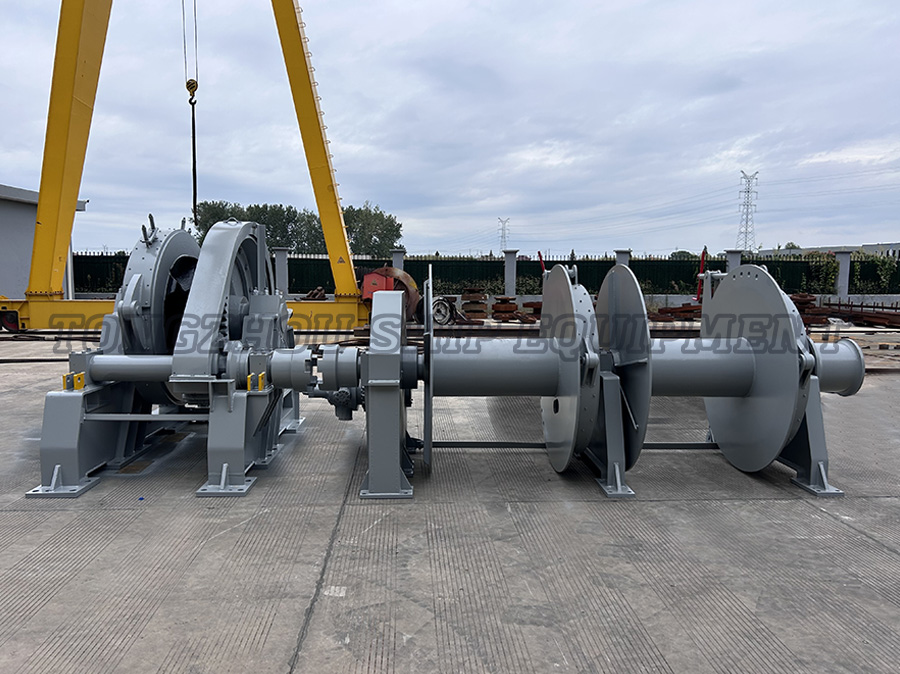
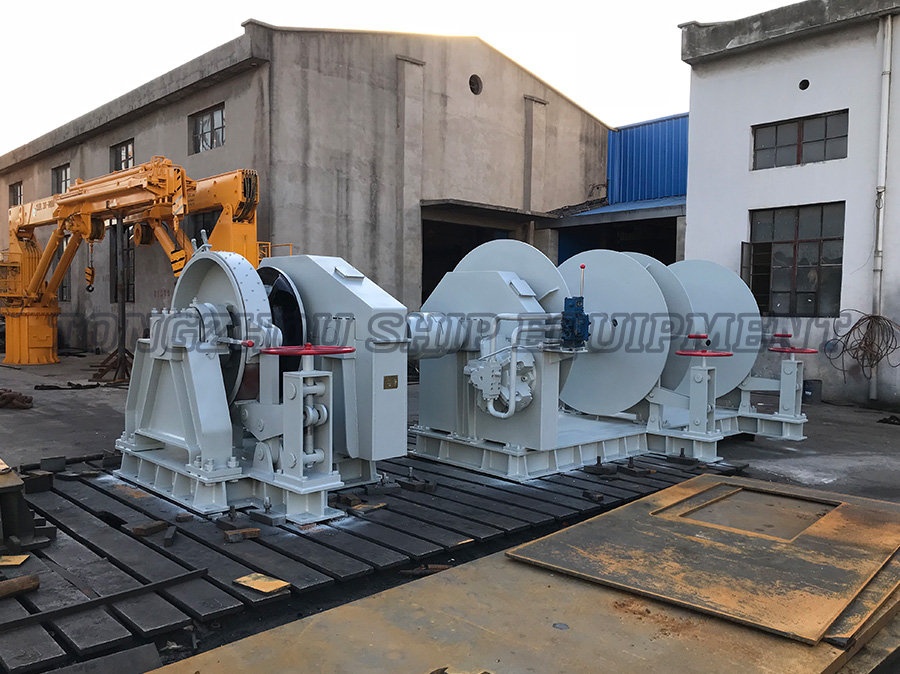 Hydraulic Combined Windlass and Mooring Winch CategoryCategory lists Hydraulic Combined Windlass and Mooring Winch 01-09 for larger vessels, including independent drums and hydraulic braking; brake setting remains important for controlled load.View Product →